
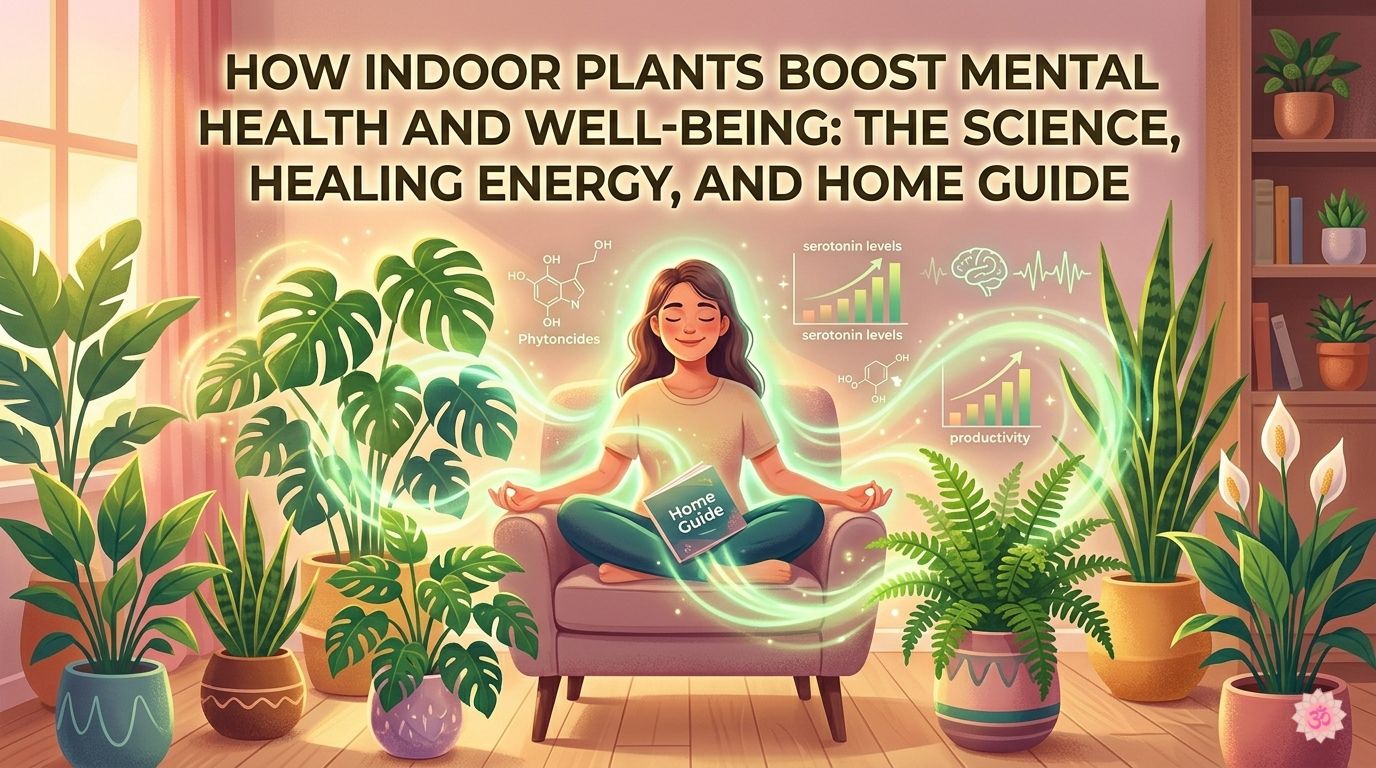
I) Indoor Plants for Mental Health: Why Your Mind Needs More Than Just a Clean Room
A gentle introduction to what you might be missing
When we talk about indoor plants for mental health, most people think of decoration, aesthetics, or maybe cleaner air.
But if you look closely at your own life, you will realize something deeper is happening.
• You may have a clean room.
• You may have everything organized.
• You may even have comfort around you.
And still, there are moments when your mind feels heavy, your energy feels low, and an unexplainable sense of restlessness or loneliness quietly sits within you.
The Real Problem Is Not Mess, It Is Disconnection
Modern life has slowly shifted us into:
• Closed rooms
• Artificial lighting
• Constant screen exposure
• Minimal connection with natural elements
Even when everything looks “perfect” from outside, inside the body and mind:
• Stress levels remain high
• The nervous system stays overstimulated
• Emotional energy feels unexpressed
This is not just your personal experience.
This is a pattern.
Science explains this through the concept of
Biophilia Hypothesis
It simply means:
Humans are naturally designed to feel connected to nature.
When that connection is missing, the mind does not feel fully at ease.
Why Emotional Imbalance Feels So Personal Yet Is So Common
There is also a quieter layer that many people do not talk about.
As humans, especially for those who carry a natural nurturing tendency, there is always a need to:
• Care
• Grow
Nurture something beyond ourselves
But in today’s lifestyle:
• This energy often gets misdirected
• Sometimes over-poured into relationships
• Sometimes left completely unexpressed
And this creates:
• Emotional exhaustion
• One-sided dynamics
• Or a silent feeling of emptiness
What feels like a “personal emotional issue” is often just misplaced or blocked nurturing energy.
Clean vs Living Spaces: What Your Mind Actually Needs
What if the problem is not that something is wrong with you
What if the environment around you is simply not alive enough to support your mind?
There is a difference between:
• A space that is clean
• And a space that is living
A room without natural elements often feels:
• Static
• Dry
• Mentally draining over time
Whereas even a small presence of plants begins to shift something subtle:
• The air feels softer
• The mind feels calmer
• The space feels more welcoming
Not because of decoration, but because something living has been introduced into your environment.
II) When the Mind Feels Heavy Without a Clear Reason
Understanding the internal imbalance we often ignore
There are moments when everything in life looks stable, yet something inside feels off.
• You are not exactly unhappy
• You are not exactly stressed
• But there is a quiet heaviness, a lack of emotional clarity
This is not always caused by external problems.
Many times, it is a result of internal imbalance that has not found a healthy outlet.
The Nervous System Needs More Than Just Rest
Your body does not just need sleep.
Your nervous system needs regulation.
In today’s lifestyle:
• The mind is constantly active
• The body is mostly inactive
• Emotions are often suppressed or over-expressed
This creates a state where:
• The brain remains alert even during rest
• Thoughts keep running without pause
• Calmness feels temporary instead of natural
This is why mental fatigue builds up even without physical exhaustion.
The Misplacement of Nurturing Energy
One of the most overlooked reasons behind emotional imbalance is this:
The human need to nurture has no balanced direction
Especially for individuals who naturally carry a nurturing tendency:
There is a deep urge to care
•To give attention
• To support growth in someone or something
But when this energy is not grounded:
• It gets over-poured into relationships
• It creates emotional dependency patterns
• It leads to giving more than receiving
And slowly, this turns into:
• Emotional exhaustion
• One-sided connections
• A feeling of being drained without knowing why
Why This Imbalance Feels So Personal
Because this experience is internal, it often feels like:
“Something is wrong with me”
“Why do I feel this way when everything is fine?”
But the truth is:
It is not a personal flaw
It is an unbalanced flow of emotional energy
Your system is not lacking strength.
It is lacking a stable, safe, and non-demanding outlet
Where Indoor Plants for Mental Health Begin to Matter
This is exactly where the role of indoor plants for mental health becomes deeper than most people realize.
Plants offer something very unique:
• They allow nurturing without emotional pressure
• They respond slowly, bringing patience into your system
• They create a rhythm of care that is calming, not draining
• Instead of over-giving in complex dynamics,
your energy begins to flow into something that:
• Grows with consistency
• Does not demand validation
• Brings a sense of quiet fulfillment
A Subtle but Powerful Shift
When nurturing energy finds the right direction:
• The mind becomes lighter
• Emotional pressure reduces
• Inner balance starts restoring naturally
And this shift does not feel forced.
It feels like something within you has finally found the right place to flow.
III) How Indoor Plants Actually Heal Your Mind and Environment
The science, the mechanism, and the deeper energy at work
Now that you understand the internal imbalance, the next question is natural:
How do plants actually create this shift?
How Indoor Plants Improve Mental Health Scientifically
The answer is not one single reason.
It is a combination of biological processes, psychological responses, and subtle energy interactions that work together.
Air Purification: What Is True and What Is Not
Let us first clear one of the most common beliefs.
Certain plants like:
• Snake Plant
• Areca Palm
• Peace Lily
• Aloe Vera
• Money Plant
were popularized after studies by NASA for their ability to absorb harmful indoor pollutants such as:
• Formaldehyde
• Benzene
• Carbon monoxide
The Truth You Should Know
Yes, plants do contribute to cleaner air
But they are not a replacement for air purifiers
What They Actually Improve
• Air freshness
• Micro-level toxin reduction
• Humidity balance
• Overall breathing comfort
Their power is subtle but continuous, not instant and mechanical
Mental Health: What Happens Inside Your Brain
This is where the real transformation begins.
When you are around plants:
• Your body reduces cortisol levels (stress hormone)
• Your nervous system begins to relax
• Your mind shifts from alert mode to calm mode
Why This Happens
• The colour green naturally soothes the nervous system
• Natural patterns reduce mental fatigue
• The brain experiences a micro-restoration effect
This is why even sitting near plants for a few minutes can make you feel lighter
️ Cooling Effect: A Scientific Process Most People Ignore
Plants also influence temperature through a biological process called
Transpiration
How It Works
• Plants release water Vapour through their leaves
• This Vapour absorbs heat from the surrounding air
• As a result, the environment becomes slightly cooler
Measured Impact
• Outdoor green areas: 2°C to 5°C cooler
• Indoor spaces: up to ~1°C reduction with 10–20 plants
Additional Effect
• Increases humidity
• Reduces dryness
• Makes air feel softer and more breathable
Even when the temperature change is small, the perceived comfort increases significantly
The Energy Layer: What Ancient Wisdom Always Knew
Beyond science, there is a deeper layer that has been recognized for centuries.
In Atharva Veda, plants are described as “Oshadhi” :-
natural healers that carry Prana (life force energy).
What This Means Practically
• Plants absorb stagnant or heavy energy
• They release fresh, balanced vibrations
• They create a sense of emotional grounding
Why You Feel Different Around Them
• The heart center (linked with the colour green) becomes more active
• Emotional fluctuations begin to settle
• The space starts feeling safer and more alive
This is not just belief.
It is a felt experience supported by both tradition and modern observation
The Real Transformation You Experience
When all these layers work together:
• Air becomes fresher
• Mind becomes calmer
• Space becomes more alive
And most importantly:
• Your system slows down naturally
• Not forced. Not controlled. Not artificial.
Just a quiet shift where:
• Thoughts reduce
• Breathing deepens
• Presence increases
This is why indoor plants for mental health are not just helpful.
They are foundational for creating a balanced living environment.
IV) How to Bring Plants Into Your Life in a Practical and Sustainable Way
Turning understanding into simple, real-life action
Now that you understand how plants influence your mind, body, and environment, the next step is simple:
How do you actually start in a way that feels easy, not overwhelming?
Because the goal is not to create pressure.
The goal is to create a space that supports you naturally.
Choosing the Right Plants for Your Home
Not every plant requires expert care.
Some are naturally adaptable and perfect for beginners.
Best Low-Maintenance Indoor Plants
• Snake Plant
• Areca Palm
• Peace Lily
• Money Plant
• Aloe Vera
Why These Work Well
• They tolerate indoor conditions easily
•They require minimal attention
• They still contribute to air quality and freshness
Starting simple ensures that your experience feels rewarding, not stressful
How Many Plants Do You Actually Need
This is where most people get confused, so let us keep it honest and practical.
Clear Guidance
1–2 plants
Adds beauty and a slight emotional comfort
5–10 plants
Creates noticeable freshness and a calmer atmosphere
10–20 plants (in one room)
Improves air feel, humidity, and can slightly enhance cooling comfort
You do not need to rush.
Start small and let your space grow with you.
Growing Herbs Indoors: A Simple Beginner Method
If you want something more interactive and fulfilling, growing herbs is the best place to start.
Easy Herbs to Begin With
• Tulsi (Holy Basil)
• Mint
• Coriander
• Basil
Step-by-Step Practical Setup
Correct skills lead to better results :-
1. Choose the Right Pot
• Always use pots with drainage holes
• Prevents water from collecting and damaging roots
2. Prepare the Soil Properly
• Use a mix of garden soil, compost, and sand
• This keeps the soil breathable and nutrient-rich
3. Ensure Sunlight Exposure
• Minimum 4–6 hours of sunlight daily
• Place near windows or balconies
4. Water with Awareness
• Do not overwater
• Keep soil slightly moist, not soaked
Most plant issues happen due to over-care, not neglect
The Deeper Value of Growing Your Own Plants
When you start growing even a small herb at home, something begins to shift within you.
• You become more patient
• You become more observant
• You begin to slow down naturally
This is why indoor plants for mental health are not just about placing pots in a room.
They are about:
• Creating a daily rhythm of care
•Building a connection with growth
• Experiencing calm through small, consistent actions
A Subtle but Powerful Reminder
You do not need a perfect home setup to begin.
You just need:
• One plant
• One small effort
• One consistent habit
And from there, your environment will start transforming gradually, in a way that feels natural and sustainable.
V) Creating a Living Space That Supports You Every Day
Tools, support, and a shift towards a more conscious lifestyle
By now, you understand that plants are not just an addition to your home.
They are a support system for your mind, your energy, and your daily rhythm.
But to make this journey consistent and stress-free, the right tools can make a real difference.
Tools That Make Indoor Gardening Easy and Consistent
Starting and maintaining plants becomes much smoother when you are supported with simple, effective tools.
Smart Indoor Gardening Solutions
Smart indoor garden kits
Help automate watering and lighting, making plant care effortless even in busy routines
LED grow lights
Support plant growth in low sunlight conditions, especially in apartments
Everyday Care Essentials
• Soil moisture meter
Helps you understand exactly when your plant needs water, avoiding overwatering
• Organic liquid fertilizers
Provide essential nutrients for steady and healthy growth
• Neem oil spray
A natural way to protect plants from pests without harmful chemicals
Space and Environment Enhancers
• Indoor plant stands
Help you organize multiple plants and turn your space into a living corner
• Indoor water fountains
Add a calming sound element, supporting relaxation and mental ease
Growth and Learning Support
• Herb seed kits or microgreen kits for beginners
• Books like The Hidden Life of Trees and The Secret Life of Plants for deeper understanding
These are not just products.
They are tools that help you stay consistent without feeling overwhelmed
Because the moment you truly understand how plants live, respond, and connect, you stop seeing them as objects and start recognizing them as a quieter form of life that has been interacting with you all along.”
From Plants to Self-Sufficiency
As you begin with small herbs and indoor plants, something naturally expands.
You may find yourself moving towards:
• Growing your own herbs regularly
• Experimenting with vegetables at home
• Creating a small system of self-sufficiency in food
This shift is not forced.
It grows from the same place where care, patience, and awareness begin.
The Real Change You Will Experience
With time, you will notice:
• Your space feels calmer
• Your routine becomes more grounded
Your mind feels less rushed and more present
And most importantly:
You stop feeling like you are constantly “managing life”
You start feeling like you are living in alignment with it
A Final Truth to Carry With You
What begins as a small step with indoor plants and herbs can grow into something far more powerful — a space where you cultivate your own vegetables, build self-sufficiency, and experience the quiet abundance of growing your own food.
• In a world that constantly pushes you to move faster, plants gently teach you the opposite.
• They remind you that growth is slow, steady, deeply rooted, and built on patience.
“Plant peace in your space, plant patience in your routine, and slowly, you will see your life grow into something calmer, fuller, and beautifully alive.”