Why Is Animal Cruelty Considered Spiritually Wrong?
Once, I was discussing with my friend about how animal cruelty is rising nowadays.
Also in today’s social media era, I’ve seen enough—and I think I’ve had enough—of such videos where cruelty towards animals is happening on another level.
Not just casually by human beings, but also by various big companies and institutes using them for testing, and so on.
Because it is never truly about the company or its people; the real problem lies in the lack of true wisdom, awareness, and understanding.
That is why it inspires me to make people aware of the consequences
by telling them why animal compassion is not just about humanity, but also a well-developed truth rooted in the secrets of divinity within us.
What many people don’t realise is that animal compassion isn’t just a moral thing — it’s actually a divine secret and a scientific fact.
And so I’m going to explore that truth from three simple angles.
PART-1 DIVINE REASONS TO CARE FOR ALL LIFE FORMS
PART-2 COMPASSION TOWARD ANIMALS AS A MEASURE OF HUMANITY
PART-3 THE SCIENTIFIC NECESSITY OF PROTECTING ANIMALS
PART-1 :- Why Is Animal Cruelty Considered Spiritually Wrong?
(This is where the deeper understanding of why animal cruelty is wrong truly begins — not from anger, but from awareness.)
Why Is Animal Compassion a Divine Law and Not Just a Moral Choice?
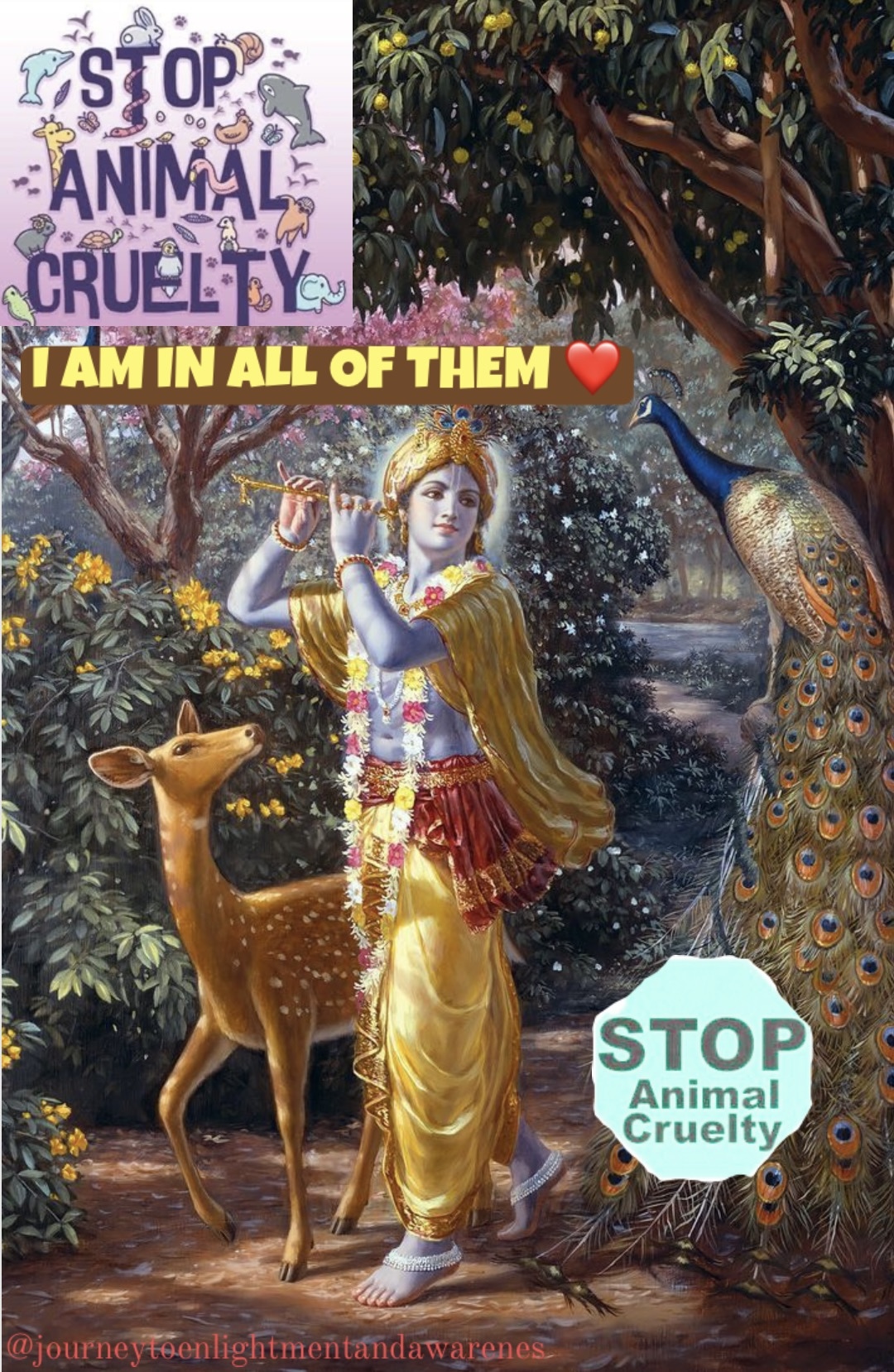
So, by now, we know how God, the Creator of the Universe, has manifested Himself into various living beings or creatures just to add variety to His world, and also to feel the thrill of living or acting as different beings.
Just like we love changing costumes and dresses throughout our life to create excitement and adventure, God Himself has manifested into various forms like humans, plants, insects, and animals.
(When this truth is understood, it becomes clear why animal cruelty is wrong at the level of consciousness itself.)
How Did the Loss of Divine Wisdom Lead to Animal Cruelty?
But with time, real knowledge and divine wisdom began to fade.
Humanity slowly forgot the truth that all life emerges from the same divine source.
Instead, a false hierarchy was created, where animals and insects were seen as inferior to human beings.
This belief distorted human consciousness.
Creatures that are, in truth, manifested expressions of the Divine were reduced to objects of use, control, or neglect.
This became a silent turning point in history — where humans, disconnected from their sacred origin, began committing cruel acts as if nothing was wrong.
Today, I wish to break this deeply rooted illusion by giving you divine wisdom and facts stated in many scriptures, many of which I have explored in depth in my first blog under the heading (Why We Are All Divine Beings: The Deep Connection Between Big Bang Theory and Spirituality).
(This misunderstanding is one of the strongest reasons why animal cruelty is wrong, yet appears “normal” to many.)
this false mindset by giving you divine wisdom and facts stated in many scriptures, also explained deeply in my first blog under the heading
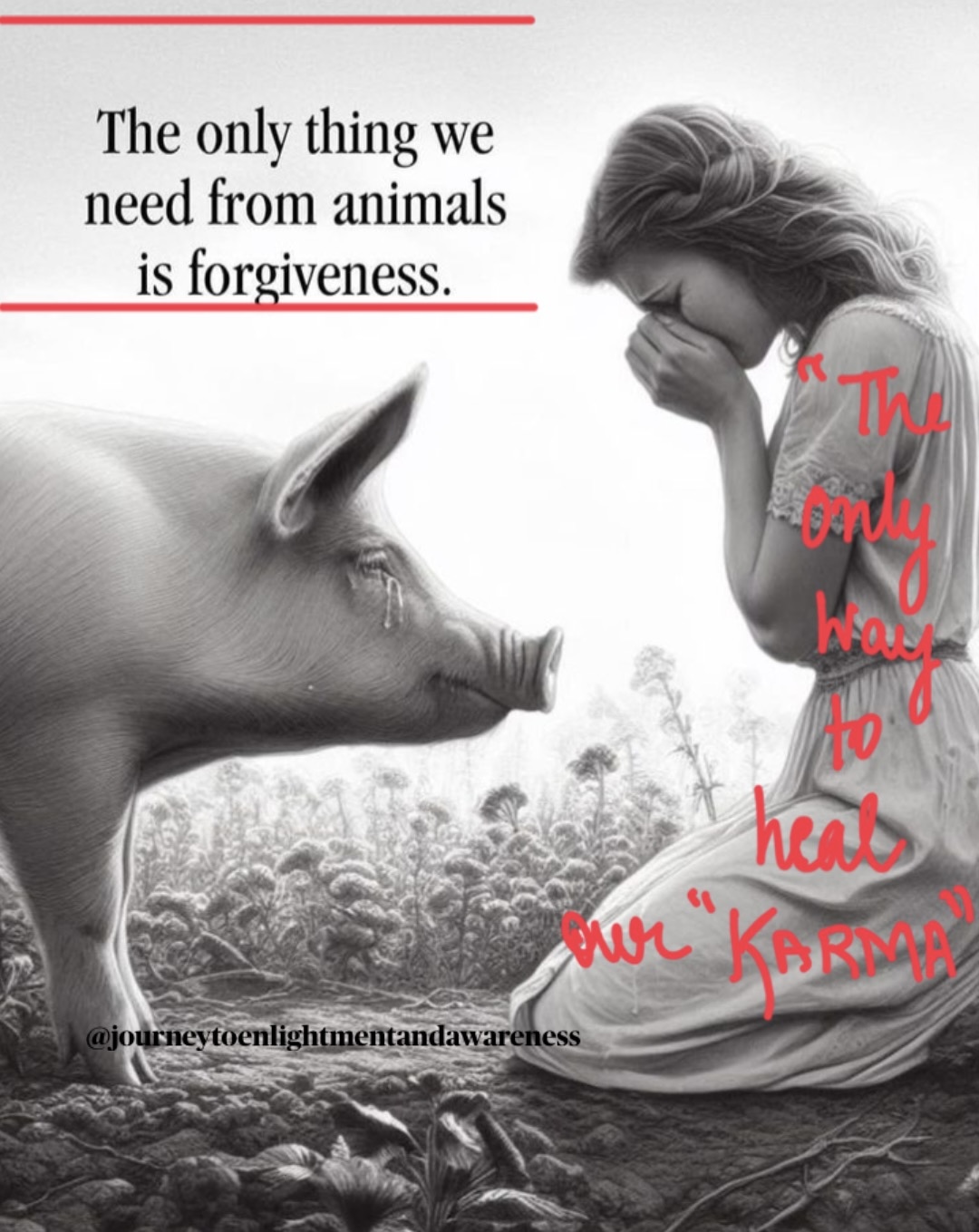
Does Ignorance Toward Animals Create Negative Karma?
When divine understanding was lost, ignorance did not remain neutral — it began shaping human actions.
People started operating from limited awareness, unaware that every thought, intention, and action leaves an imprint on karma.
By categorizing certain lives as unimportant, humans unknowingly invited the weight of negative karmic consequences into their own journey.
Karma does not punish — it mirrors.
When compassion disappears from consciousness, imbalance follows naturally.
The suffering inflicted upon animals does not vanish; it returns in subtle, often unseen ways — through inner unrest, collective disharmony, and spiritual stagnation.
(Ignorance does not protect anyone from karma, which is precisely why animal cruelty is wrong even when it is socially accepted.)
What Does the Mahabharata Teach About Animal Cruelty and Karma?
The Story of Sage Mandava from Mahabharata
So, I want to tell you one story from the Mahabharata that I read myself. It goes like this:
Once upon a time, a thief, after stealing gems from the king’s kingdom, was running away.
In search of him, the king’s men found a group resting near Sage Mandavya.
As a result, the king ordered them all (including sage) to be pierced with a trident.
Feeling overwhelmed, the sage asked Yama (the god of death) why this was happening to a respected sage like him when he had done nothing wrong.
Hearing his cry, Lord Yama replied that in one of his previous births, at the age of just five, he had pierced a stick into the body of a grasshopper.
Because of that act, he had to suffer such karmic punishment in this birth.
(This single story explains more clearly than any argument why animal cruelty is wrong.)
Is Karma for Hurting Animals Real According to Scriptures?
Karma Is Real – You Cannot Escape It
This story makes it crystal clear that karma is real, and nobody can escape it—no matter how much the evil inside you convinces you that it’s okay to do wrong to living beings.
You always pay for what you do, even if you don’t see the repercussions in the present moment.
(Karma does not forget, delay does not mean denial , this is a core reason why animal cruelty is wrong.)
How Are Rebirth and Animal Suffering Connected?
Rebirth and the Eternal Soul
The concept of reincarnation is deeply tied to the belief in the eternal soul or Atman. The cycle of birth, death, and rebirth is known as samsara.
This process is influenced by the law of karma, which means the consequences of one’s actions—whether from the past or the present life—determine their current and future circumstances.
Do Souls Take Birth as Animals Before Becoming Human?
According to various scriptures and commonly known truth, the soul takes birth as animals or insects before getting the precious opportunity to be born as a human being.
This understanding invites us to see life not as random, but as a carefully unfolding journey of consciousness, where every form of life carries its own role and learning.
This process keeps continuing until the soul attains liberation (moksha), which is only possible in a human birth.
Human life is considered sacred not because it is superior, but because it offers the rare ability to become self-aware, to choose compassion over instinct, and wisdom over impulse.
(When seen from this wider lens of the soul’s journey, it becomes even clearer why animal cruelty is wrong — not morally alone, but spiritually.)
Why Does Hurting Animals Come Back to Us Across Lifetimes?
If we inflict pain on animals or insects by killing or mistreating them during our human birth—and if we also teach our future generations to do the same—it will ultimately affect us only.
Because no action performed in awareness or ignorance ever truly disappears; it leaves an imprint on the soul’s memory.
Because when we take birth as an animal or insect in our next life, then our future family generations are going to be the ones inflicting pain on us—just like we did to other beings before.
In this way, karma does not act as punishment, but as balance — allowing the soul to fully understand the weight of its own actions through lived experience.
And of course, it’s because we ourselves started this cruel trend, so we will suffer the consequences in our next birth.
That’s how karma works. That’s how tradition works.
This is the very reason why our ancestors used to be so cautious of their actions—because they didn’t want to start something awful that would come back to them in their upcoming birth, ultimately creating a chain of karmic mistakes and burdens that would stop any soul from attaining liberation.
They understood that cruelty, once normalized, does not end with one lifetime; it repeats itself until awareness replaces ignorance.
And so, the suffering keeps continuing until it ends with moral change.
(This quiet continuity of cause and consequence explains, in the deepest sense, why animal cruelty is wrong.)
Therefore:- “The soul does not evolve by dominating life, but by recognising itself in every form of life it once was.”
Do Humans and Animals Share the Same Spiritual Essence?
The idea of the soul incarnating as animals or insects before taking human birth is linked to the understanding that all living beings share a common spiritual essence.
This belief creates a sense of interconnectedness and encourages compassion and empathy toward all forms of life.
(When this truth is realised, animal compassion stops being optional — and animal cruelty becomes impossible.)
Are Animals Considered Spirit Guides in Spiritual Traditions?
ANIMALS ARE EVEN CONSIDERED AS SPIRIT GUIDES:
In various religions and belief systems, animals are considered spirit guides for several reasons:
What Spiritual Lessons Can Humans Learn From Animals?
Spiritual Lessons from Animals – Inspired by Lord Dattatreya
Animals are not just creatures of nature—they are teachers offering profound spiritual lessons. By observing their behaviour and qualities, we can gain insights into ourselves and the world around us.
Lord Dattatreya, a great sage, demonstrated this by learning from 24 gurus, many of whom were animals or elements of nature.
Here are some key examples:
What Does the Elephant Teach Us About Self-Control?
1. Elephant – The Teacher of Self-Control
Observing elephants, Dattatreya saw how their blind pursuit of desires could lead them into danger.
Lesson: Unchecked desires can trap us; self-control is essential for spiritual growth.
What Does the Deer Teach Us About Calmness?
2. Deer – The Teacher of Calmness
Deer are easily lured by sounds or movement, often leading them into traps.
Lesson: Fear and distractions can guide us into harmful situations; staying calm and mindful protects the soul.
What Does the Fish Teach Us About Awareness?
3. Fish – The Teacher of Awareness
Fish are drawn to bait, unaware of the danger.
Lesson: Greed and impulsiveness can lead to our downfall; awareness is key.
What Does the Moth Teach Us About Passion Control?
4. Moth – The Teacher of Passion Control
Moths fly toward flames, risking destruction.
Lesson: Uncontrolled passion or attraction to harmful things can be self-destructive.
What Does the Pigeon Teach Us About Detachment?
5. Pigeon – The Teacher of Detachment
Pigeons often suffer due to attachment to their nests or partners.
Lesson: Excessive attachment can bring suffering; learning detachment is a step toward liberation.
(These lessons from animals further explain dharma towards animals — teachers should be honoured, not harmed.)
Can Animals Sense Natural Disasters Before Humans?
Just as animals become spiritual teachers through their behavior — like the pigeon teaching detachment — they also guide humanity in another quiet yet powerful way: through their deep connection with nature itself.
Animals are not separate from the natural world; they live in constant harmony with its rhythms.
Their instincts are not random reactions but refined awareness, developed over centuries of listening to the earth.
When humans slow down and observe, animals gently guide us — not through words, but through presence and response.
A striking example of this was seen during the 2004 Indian Ocean tsunami. Elephants and other wildlife in Sri Lanka moved inland hours before the waves struck, saving themselves.
While modern technology failed to give timely warnings, animals responded to subtle environmental shifts that humans could not sense.
This reveals another divine truth: animals act as guardians of the natural order. Through their awareness, they offer warnings and help maintain balance — if we remain attentive enough to notice.
Yet today, many people ignore street animals or treat them as inconveniences, pushing them out of shared spaces.
If we disconnect ourselves from these living sensors of nature, can we still expect to receive their silent guidance when danger approaches?
Respecting animals and observing their signals is not merely kindness; it is a form of listening to nature itself.
It is a path toward harmony, safety, and shared survival.
(When animals protect the balance of nature, harming them only weakens our own connection to life.)
CONCLUSION:-
Through divine teachings and the timeless lives of sages and awakened souls, one truth becomes clear — our connection with all living beings is sacred.
Compassion for animals is not merely a moral idea; it is a living expression of consciousness, reflecting the harmony that once guided humanity.
When we choose kindness over cruelty, we do not only protect animals — we heal something within ourselves.
Our thoughts soften, our karma lightens, and our relationship with nature begins to restore itself.
This is how civilisations grow, not through dominance, but through awareness.
In its simplest and most honest form, this is why animal cruelty is wrong — because harm given to the innocent always returns to the giver, and love extended to the vulnerable always elevates the soul.
“The way we treat those who cannot speak for themselves reveals the true depth of our humanity.”
If humanity wishes to move forward, spiritually and consciously, compassion toward animals is not optional — it is essential.