Why Is Compassion for Animals Important for Humanity?
In this part, we uncover the real reasons animal compassion is vital — reasons grounded in humanity and proven by science.
When we choose empathy over ignorance, we don’t just protect animals; we shape a more conscious and kinder world for ourselves.
Let’s journey together to understand how compassion for every living being reflects our humanity, strengthens our emotional intelligence, and brings deep inner fulfillment.
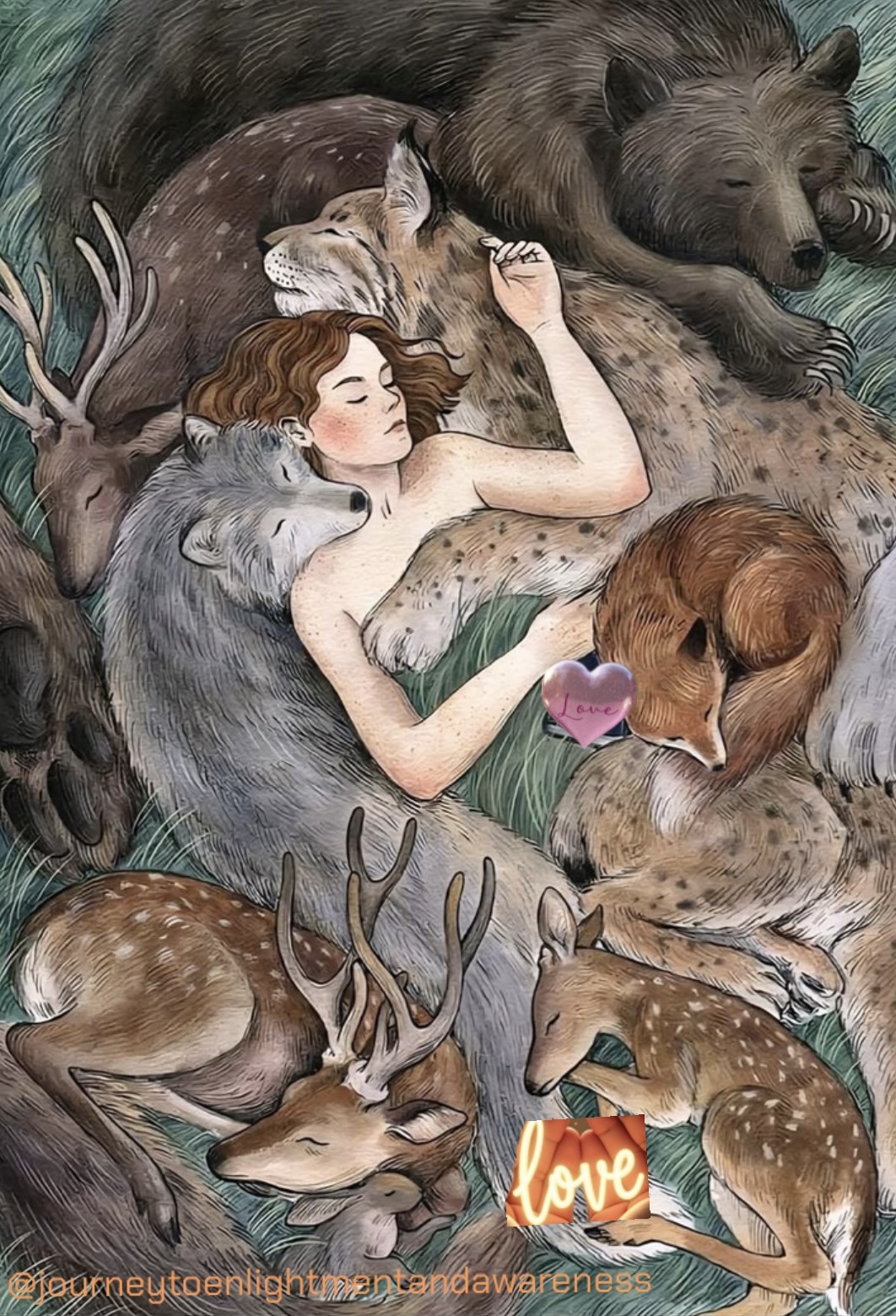
Animals share the same world as us, feel emotions, and are not less important than humans. Recognizing this helps us understand why they deserve ethical treatment.
Do Animals Have Emotions Like Humans?
Often, animals are seen as driven only by instinct and considered inferior.
But their intelligence, emotions, and complex behaviours prove otherwise.
They experience love, form deep bonds, and show empathy, just like humans do.
Seeing these similarities helps us connect with them and encourages compassion in our actions.
Animals, like us, feel joy, fear, grief, and affection, and they build meaningful relationships with others.
How Are Human and Animal Emotions Similar?
When we observe animals without bias, the similarities become impossible to ignore:
For example:
1. Joy and Happiness
Humans: Smile, laugh
Animals: Dogs wag their tails, play
2. Grief and Mourning
Humans: Cry, show sadness
Animals: Elephants mourn their dead, show distress
3. Empathy and Consolation
Humans: Comfort others
Animals: Chimpanzees console friends in distress
4. Fear and Anxiety
Humans: Heart beats faster, avoid danger
Animals: Tremble, hide when scared
5. Curiosity and Exploration
Humans: Ask questions, explore
Animals: Investigate surroundings, learn new things
6. Anger and Aggression
Humans: Raise voice, show aggression
Animals: Growl, act defensively
7. Affection and Bonding
Humans: Hug, touch lovingly
Animals: Groom, nuzzle, form strong bonds
8. Do Animals Experience Motherhood Like Humans?
One of the most profound similarities lies in childbirth and motherhood.
Both human and animal females undergo labor, uterine contractions, hormonal changes, and emotional vulnerability while bringing new life into the world.
The physical pain and instinctive care that follow reveal a deeply shared experience of creation and protection.
Motherhood, across species, is an act of sacrifice, endurance, and love.
Animal emotions vs human emotions
When we recognize that animals experience life in ways very similar to ours, it becomes clear that harming them without reason is unfair.
Taking their lives or ignoring their emotional world denies them the right to live fully and goes against the basic principle of respect for all life.
•THE ETHICAL DILEMMA: CHOOSING COMPASSION OVER CONVENIENCE
1) Is It Right to Compare Animal Survival Instincts with Human Choices?
Many people argue that since animals eat other animals, humans can do the same. At first glance, this comparison may seem logical—but when we look deeper, it doesn’t truly hold.
Animals in the wild hunt purely for survival. They do not have farms, markets, money, or alternatives. Their bodies, instincts, and environment are designed in such a way that hunting becomes their only means to stay alive. There is no choice involved—only necessity.
Humans, however, live very differently. We have intelligence, resources, and countless options to earn, grow, and purchase food. We can choose what we eat, how we eat, and why we eat it. This ability to choose places us in a completely different ethical position than animals.
From ancient times—Satyuga, Tretayuga, and Dwaparyuga—meat consumption was not considered the natural way of life for humanity. Those who consumed flesh were largely associated with asuras and rakshasas, not with spiritually aware or dharmic living beings.
It was mainly during Kaliyuga that eating animals gradually became normalized. Over time,these recent habits started being presented as age-old traditions. But that’s not the real truth of how humanity lived in earlier times.
Understanding this difference helps us see why animal compassion is a conscious human responsibility, not a comparison with animal instinct.
2) Why Killing Animals for Food Raises an Ethical Question Today
It is deeply unsettling to realise that an animal is killed simply to satisfy our hunger for one single meal—especially when so many alternatives exist.
Every animal values its life, fears death, and struggles to survive, just as we do. Yet, despite having abundant plant-based foods, grains, fruits, vegetables, and nourishment provided freely by nature, humans often still choose to take a life.
When we pause and reflect, this act becomes difficult to justify.
Is momentary taste worth ending an entire life?
Is convenience enough reason to cause suffering?
Nature has already given us everything we need to live peacefully and healthily—without bloodshed. Choosing compassion over convenience is not about deprivation; it is about awareness.
At its core, animal compassion is the recognition that unnecessary harm creates inner imbalance. When violence becomes casual, sensitivity slowly fades—not just toward animals, but toward life itself.
3) Does Our Idea of “Progress” Forget Animal Compassion?
Sometimes, when I think about it, it feels strange.
We call ourselves advanced. We build powerful machines, explore space, grow plants in controlled labs, and invent solutions for almost everything. Yet when it comes to food, we still depend on killing animals.
It makes me pause and ask—what kind of progress is this?
If we have the intelligence to create so many alternatives, then continuing to harm animals is no longer about survival. It becomes a choice. And choices reflect who we really are.
Maybe real progress isn’t just about how far we’ve come technologically, but about how softly we can live. Maybe animal compassion is not the opposite of advancement, but the proof of it.
4) Why Is Killing a Human a Crime, but Killing an Animal Feels Normal?
If killing a human being is called murder and is morally and legally condemned, why is killing an animal for food rarely questioned in the same way?
Life, at its essence, is life—whether it exists in a human body or an animal one.
Both wish to live. Both experience pain.
Both fear death.
The difference lies not in their ability to suffer, but in how we have chosen to value them.
Over time, humans placed themselves at the top of a self-created hierarchy, deciding which lives matter more and which can be taken without guilt.
This separation made animal suffering feel distant, normalised, and invisible.
But when we reflect honestly, the question isn’t about law—it’s about conscience.
Animal compassion asks us to examine why we justify harm simply because the victim cannot speak our language.
When we begin to see animals not as resources, but as fellow travelers in life, this moral contradiction becomes impossible to ignore.
Therefore If life is sacred, then its value cannot depend only on the form it takes.
The habit of separating lives into “worthy” and “less worthy” is what slowly numbs sensitivity.
When we question this difference, we are not rejecting humanity—we are expanding it.
Animal compassion gently reminds us that respect for life is not selective; it is complete.
Why Is Feeding Hungry Animals an Act of Compassion and Human Responsibility?
I often pause and observe the silent beings around us—the herbivores who share this planet but have no voice to demand their basic right: food. Not luxury.
I understand that not everyone can afford to provide food like milk, pudding, or chapati to dogs or cats on a daily basis.
Those things cost money, and financial limitations are real. But what truly shocks me is something much deeper—even cows are left hungry in our world today.
When you look closely, many of them appear like living skeletons.
This isn’t because food doesn’t exist. It’s because care and attention are missing.
Imagine how far humanity has drifted that we cannot even allow these gentle beings to fill their stomachs with something as simple and freely available as green grass.
Cows don’t demand luxury.
They don’t need expensive food.
Green grass, leftover vegetable peels, and fruit scraps—things we often throw away without thought—are enough to sustain them.
The cost is almost nothing. What is missing is not money, but awareness.
And then we wonder why life feels so heavy. Why stress, anxiety, and negativity surround us everywhere.
Why peace feels distant, even when comfort and wealth have increased.
I may not have the perfect words to explain the karma cycle, but it is difficult to ignore the contradiction—even in a world of billionaires, there seems to be no space in the heart or the routine to feed a hungry, innocent being.
What makes this even more painful is how casually harm has become normal.
Domesticated animals are hit by vehicles, slaughtered, or ignored without a second thought—as if the divine presence within them is invisible, or as if their pain doesn’t count.
But the truth is, cycles do not always change through revolutions.
Most of the time, they shift through the smallest corrections.
Feeding even one hungry being is not some heroic act or grand charity—it is simply restoring something that should never have been broken in the first place.
When an animal eats after being hungry for hours or days, something subtle but powerful happens.
The imbalance reduces.
The silent suffering pauses.
And at the same time, something inside the human heart softens.
Not because of pride, but because the heart remembers how to care again.
Compassion does not always demand sacrifice, wealth, or effort.
Many times, it only asks for awareness.
To pause for a moment.
To notice the hunger standing right in front of us. And to respond instead of walking past it.
In that small response, a quiet exchange takes place.
The animal receives food, but the human receives something deeper—calm, clarity, and a gentle return to humanity.
And this change doesn’t stop at the human heart alone.
Every small act of care quietly lifts the overall vibration of the world itself.
When hunger is reduced, even for one being, a little less pain exists in the atmosphere—and that subtle shift matters more than we realise.
This is why such acts feel peaceful rather than exhausting.
They are aligned with our natural state (of being divine).
Blessings do not always arrive as rewards we can measure.
Sometimes they come back as lighter hearts, calmer minds, and a softer energy around our lives.
When we feed life, life responds in its own silent way.
And that is how the cycle shifts—not loudly, not dramatically—but through one conscious act that reminds the world, and ourselves, that care still exists.
How do we care for animals?
Learn simple and practical ways to care for animals and improve street animal feeding in your community. Small acts, like sharing food or creating shelters, can make a big difference and promote animal welfare.
Here are some simple steps each colony can adopt to care for animals and improve street animal feeding practices:
1. Set up feeding spots:
Choose one or two central locations in the colony and place three large bowls—for milk, chapati/food, and leftover vegetables—along with a big bucket of water.
This ensures animals can eat and drink safely.
2. Keep a basic medicine box:
Each colony should keep a medicine box for street animals, including a list of nearby animal welfare NGOs.
In emergencies, anyone can use this to help prevent unnecessary pain or sickness in animals, supporting overall animal welfare.
3. Create shelter spaces:
Collect a small fund, like ₹5 from each household, to buy a tarpaulin or plastic sheet.
Tie it between trees or poles to make a simple refuge for animals during rains.
4. Provide warmth in winters:
With the same process of collecting the fund, colonies can buy quilts or encourage households to donate old clothes to cover animals, keeping them warm and comfortable.
5. Open green spaces:
If possible, allow unused parks or open areas for grazing animals like cows.
The Earth belongs to all living beings, and every creature deserves space to feed safely.
6. Support NGOs for urgent cases:
Be vigilant—click pictures or videos of sick or injured animals and notify a reliable NGO.
If possible, collect small contributions from households to give directly to these NGOs, so they can provide proper medical care and support for animals in need.
Following these simple steps, each colony can uphold dharma while nurturing kindness in every heart. It requires minimal financial effort but creates enormous impact. Unity in these small actions can transform society, making it more compassionate and conscious of all living beings.