Does Trauma Always Come From Broken Expectations?
Trauma is something we all hear about.
We use the word often — to describe pain, fear, and experiences that stay with us long after they are over.
But when we pause and truly ask ourselves, what is trauma, a deeper curiosity begins to unfold.
But if you sit quietly and really think about it, a deeper question arises:
Is trauma something that randomly happens to us… or is there something underneath it that we are not fully seeing?
Most explanations tell us that trauma comes from shocking or painful events.
And that is true.
But if you look closely, not every painful experience turns into trauma.
Some people go through the same situation and move forward, while others carry it for years.
So what makes the difference?
As I reflected on this, one realization slowly became clear:
What if trauma is not just about what happened… but about something inside us that got broken when it happened?
This is where understanding what is trauma becomes deeper than just definitions.
Trauma and Expectations: What Is the Hidden Connection?
In everyday life, we move through the world with countless unspoken expectations.
This is an important part of understanding what is trauma in a real-life context.
We don’t always notice them, but they quietly shape how we feel and how we respond to life.
A child expects to be loved and protected.
A person in a relationship expects loyalty and care.
We believe our homes are safe, our bodies will support us, and our lives will move in a certain direction.
These are not always conscious thoughts.
They are silent assumptions — the foundation on which we feel stable.
But when one of these assumptions suddenly breaks…
that is when something shifts.
The pain we feel is not just from the event itself.
It comes from the collapse of something we trusted.
And this is where trauma often begins — and where we begin to truly see what is trauma beyond just events.
Do Sudden Events Cause Trauma Without Expectations?
At first, it may seem like trauma can come completely out of nowhere.
But when we reflect on what is trauma, we see patterns even in sudden events.
A sudden accident.
A natural disaster.
A violent or unexpected incident.
In these moments, it feels like there was no expectation — just shock.
But if you look a little deeper, even here there was something underneath.
A person believed they were safe on the road.
Safe in their home.
Safe in their environment.
These beliefs were not spoken, but they were present.
And when that sense of safety collapses in an instant, the mind and body struggle to process it.
So yes, sudden events can create trauma.
But often, they do so because they break a trust we didn’t even know we were holding — again pointing towards what is trauma at a deeper level.
Why Do Broken Childhood Expectations Turn Into Trauma?
Childhood is where our deepest expectations are formed, and this stage plays a huge role in shaping what is trauma for many people.
A child naturally looks for:
Protection from parents
Comfort when hurt
Guidance and emotional safety
These are not just desires — they are basic emotional needs.
When these needs are met, the child develops a sense that the world is safe.
But when they are not — through neglect, rejection, or conflict — something deeper happens.
The child does not just feel hurt.
They start forming beliefs like:
“I am not safe”
“I am not important”
“Love is unreliable”
And because these beliefs are formed early, they often go unquestioned.
They quietly follow us into adulthood — shaping relationships, self-worth, and emotional responses.
This is why childhood wounds can stay for so long.
Not because the past is still happening…
but because the belief created from it is still active — shaping our understanding of what is trauma in our lives.
Why Betrayal Hurts More Than Anything Else
Among all types of trauma, betrayal is often one of the hardest to heal, and it reveals an emotional side of what is trauma.
Because betrayal does not just hurt you…
it breaks your ability to trust.
When someone you depend on — a partner, a parent, a friend — betrays you, they don’t just hurt you in that moment.
They break the belief: “I can rely on you.”
And once that belief breaks, it doesn’t stay limited to one person.
It begins to affect how you see everyone.
You become more guarded.
More cautious.
Less open.
Not because you want to…
but because your mind is trying to protect you from feeling that pain again.
This is why betrayal trauma runs deep.
It doesn’t just affect your emotions — it reshapes your view of relationships and deepens your personal experience of what is trauma.
What Is Trauma When You Feel Completely Overwhelmed
There are also moments where trauma is not only about expectations, but about overwhelm. This adds another layer to understanding what is trauma.
Situations where the experience is so intense that the body cannot process it in the moment:
Extreme fear
Physical danger
Sudden shock
In such moments, the nervous system goes into survival mode — fight, flight, or freeze.
And even if there wasn’t a clear expectation in your mind, the experience can still leave a deep imprint.
But interestingly, when people later reflect on such events, they often describe how it changed their sense of life.
They may say: “I thought life was safe.”
“I thought things would be normal.”
Which again shows that even here, trauma is often connected to a shift in belief — helping us understand what is trauma more clearly.
How Trauma Actually Forms (The Hidden Chain)
If we look closely, trauma often follows a pattern, and this pattern helps us understand what is trauma step by step:
An expectation exists — about safety, love, or stability
An event happens — sudden, painful, or overwhelming
That expectation collapses
The mind struggles to understand what happened
The body reacts with fight, flight, or freeze
A belief forms to make sense of it
That belief stays, shaping future experiences
The event passes.
But the meaning we attach to it stays.
And that meaning becomes the lens through which we see life — this is the core of what is trauma.
So, Is Trauma Always About Broken Expectations?
From everything we’ve explored, the answer is:
Often — yes. But not always in a simple way.
Trauma is usually tied to something we believed:
That we would be safe
That we would be loved
That life would follow a certain path
And when that belief is broken, the impact goes deeper than the event itself.
At the same time, we cannot ignore the role of the body.
Some experiences are so overwhelming that trauma can form even without a clearly defined expectation.
But even then, when we reflect on those experiences, we often find that something inside us — some sense of safety or order — was shaken.
And that again connects us back to understanding what is trauma.
What Is Trauma? Is It About What Happened… or What It Meant?
This is where a deeper understanding begins.
When we ask what is trauma, we begin to see that it may not only be about the event…
but about the meaning we gave to it.
Because if the event alone created trauma, then everyone who experienced the same situation would feel the same way.
But they don’t.
What differs is:
The belief formed
The interpretation created
The story we carried forward
And this realization is powerful.
Because it shows that while we may not control what happens to us…
we can slowly become aware of what we made it mean.
And that awareness is the beginning of healing.
Krishna’s Wisdom on Expectations and Inner Peace
This understanding is not new.
Long before modern psychology, Krishna offered a simple yet profound insight.
As the Bhagavad Gita says:
“You have the right to your duty, but not to its results. Do not think yourself the cause of the outcome, and do not fall into inaction.”
This teaching points to something very important.
Much of our suffering does not come from what we do…
but from our attachment to how things should turn out.
We don’t just act — we expect.
We expect people to behave a certain way.
We expect life to unfold smoothly.
We expect fairness, stability, and control.
And when reality doesn’t match that expectation, the pain intensifies.
Krishna’s wisdom is not asking us to stop caring.
It is asking us to act fully, but not tie our peace to outcomes.
Because the moment your peace depends on something you cannot control, you become vulnerable to suffering — which is deeply connected to what is trauma.
Why Do I Keep Holding On to the Pain Even When It’s Over?
Even when we understand this, something inside us still holds on.
And that brings us to a deeper question — one that helps us understand what is trauma in our daily life.
If you look closely, you’ll notice something important.
The situation that hurt you… it didn’t last forever.
It passed.
But what stayed was the feeling — and more importantly, the belief you formed from it.
Instead of letting the experience move through you, your mind held on to it.
It turned it into a conclusion:
“Life is hard”
“People can’t be trusted”
“I am not safe”
And once a belief forms, it doesn’t stay in the past.
It starts shaping how you see everything.
So now, you are not just responding to the present moment.
You are reacting through the lens of the past.
This is why even small situations can trigger strong emotions.
Because you’re not just feeling this moment…
you’re reliving something older.
This is how trauma continues.
Not because the past is still happening —
but because the meaning created from it is still active.
What Questions Should I Ask Myself to Heal from Trauma?
Once you see this clearly, a new kind of awareness begins — and you start understanding [what is trauma] within your own experience.
And instead of asking, “Why did this happen to me?”
you begin to ask something deeper:
“Why did I hold on to this in the way I did?”
“What did this experience make me believe about myself and [what is trauma] in my life?”
This is not about blaming yourself.
It is about understanding yourself — and slowly realizing [what is trauma] is not your identity.
Because when you look honestly, you may notice:
You didn’t hold on to the pain because you are weak.
You held on because your mind was trying to protect you — this is often how [what is trauma] operates internally.
It believed that remembering the pain would prevent it from happening again.
And that realisation softens everything.
Because now, you are no longer fighting yourself.
You are beginning to understand why you became the way you did — and that is where deeper clarity of [what is trauma] begins.
And that is where real healing begins.
How Do I Start Choosing Myself Again?
Understanding is the first step — especially understanding [what is trauma] and how it shapes your choices.
But healing also requires a gentle shift in how you move forward.
For a long time, your choices may have been shaped by fear and past experiences — shaped by [what is trauma] in your life.
But now, you have awareness.
And with awareness comes the ability to choose differently, beyond [what is trauma].
You can begin, slowly, to choose:
Your laughter
Your freedom
Your authentic self
Not the guarded version you became… but the one you truly are — beyond [what is trauma].
And most importantly, you begin to choose your beliefs consciously.
Because what you repeatedly believe starts shaping your experience of life — and even reinforces [what is trauma] if left unseen.
If you expect pain, you will notice it more.
If you expect disappointment, you will prepare for it.
But when you begin to choose trust, openness, and possibility, something changes — something beyond [what is trauma].
Not instantly… but gradually.
You begin to experience life differently.
Can I Really Start Fresh After Trauma?
This is a question many people carry quietly while trying to understand [what is trauma] in their own life:
“Is it really possible for me to change?”
And the answer is — yes, but not by forcing yourself to forget the past.
Healing does not mean erasing what happened or denying [what is trauma].
It means changing your relationship with it.
You are not just someone who experienced pain.
You are someone who can become aware of it — aware of [what is trauma] within you.
And that awareness gives you choice.
You are not just a character in a fixed story created by [what is trauma].
You are the one who can step back, understand it, and slowly write a new chapter.
The past may have shaped you.
But it does not have to define you or become your permanent [what is trauma] identity.
What This Looks Like in Real Life
For example, imagine someone who was betrayed in a relationship — a common experience of [what is trauma].
They might start believing, “People can’t be trusted.”
And without even realizing it, they begin to:
overthink every small thing
doubt genuine love
push people away to avoid getting hurt again
Now the pain is not just in the past anymore — it is shaping their present, which is how [what is trauma] continues.
But healing begins when they pause and ask: “Is this belief helping me… or protecting me in a way that is now hurting me?”
Slowly, they begin to see that not everyone is the same.
And instead of living in constant fear, they start allowing trust again — not blindly, but consciously beyond [what is trauma].
Or think of someone who grew up feeling ignored or unloved — another form of [what is trauma].
They may carry a belief like, “I am not important.”
So in adulthood, they might:
settle for less in relationships
stay silent even when they deserve better
constantly seek validation from others
But the moment they become aware of this pattern, something shifts — they begin to see [what is trauma] clearly.
They begin to understand: “This is not who I truly am. This is what I learned.”
And from there, they can slowly start choosing differently — moving beyond [what is trauma].
This Is What “Starting Fresh” Really Means
It doesn’t mean your past disappears or that [what is trauma] never existed.
It means your past loses its control over your present choices.
You still remember what happened.
But you no longer let it decide how you live every moment — this is the true shift beyond [what is trauma].
A Simple Way to Begin
The next time you feel triggered, pause and ask yourself:
“Am I reacting to what is happening right now… or to something I learned from the past?”
This question helps you separate your present from [what is trauma].
That one question can bring you back to awareness.
And awareness is where change begins — and where you finally move beyond [what is trauma].
Final Thought: You Are Not Your Trauma
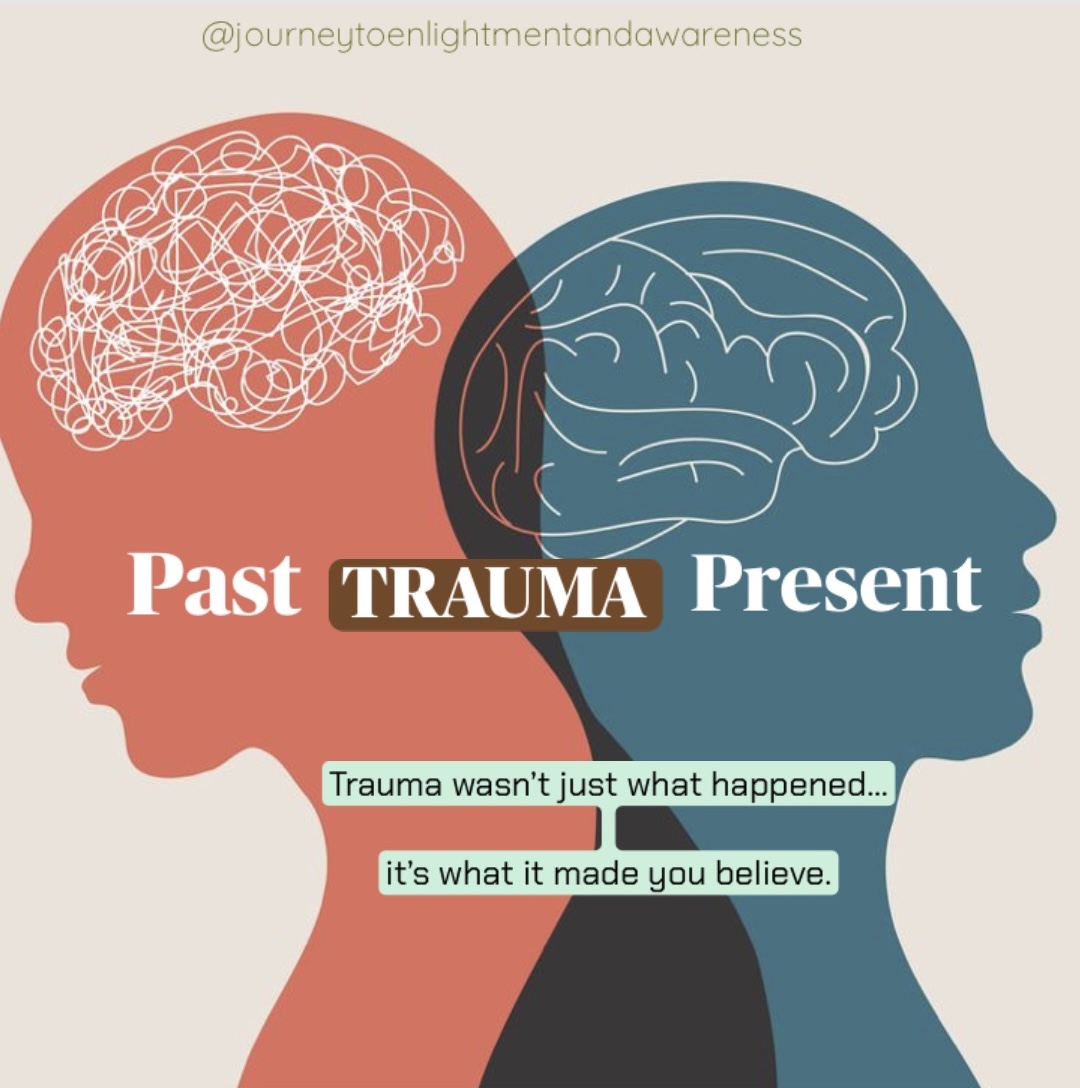
Trauma is not just what happened to you.
It is the meaning that stayed with you after it — and this is the deepest understanding of what is trauma.
And the moment you begin to see that… something shifts.
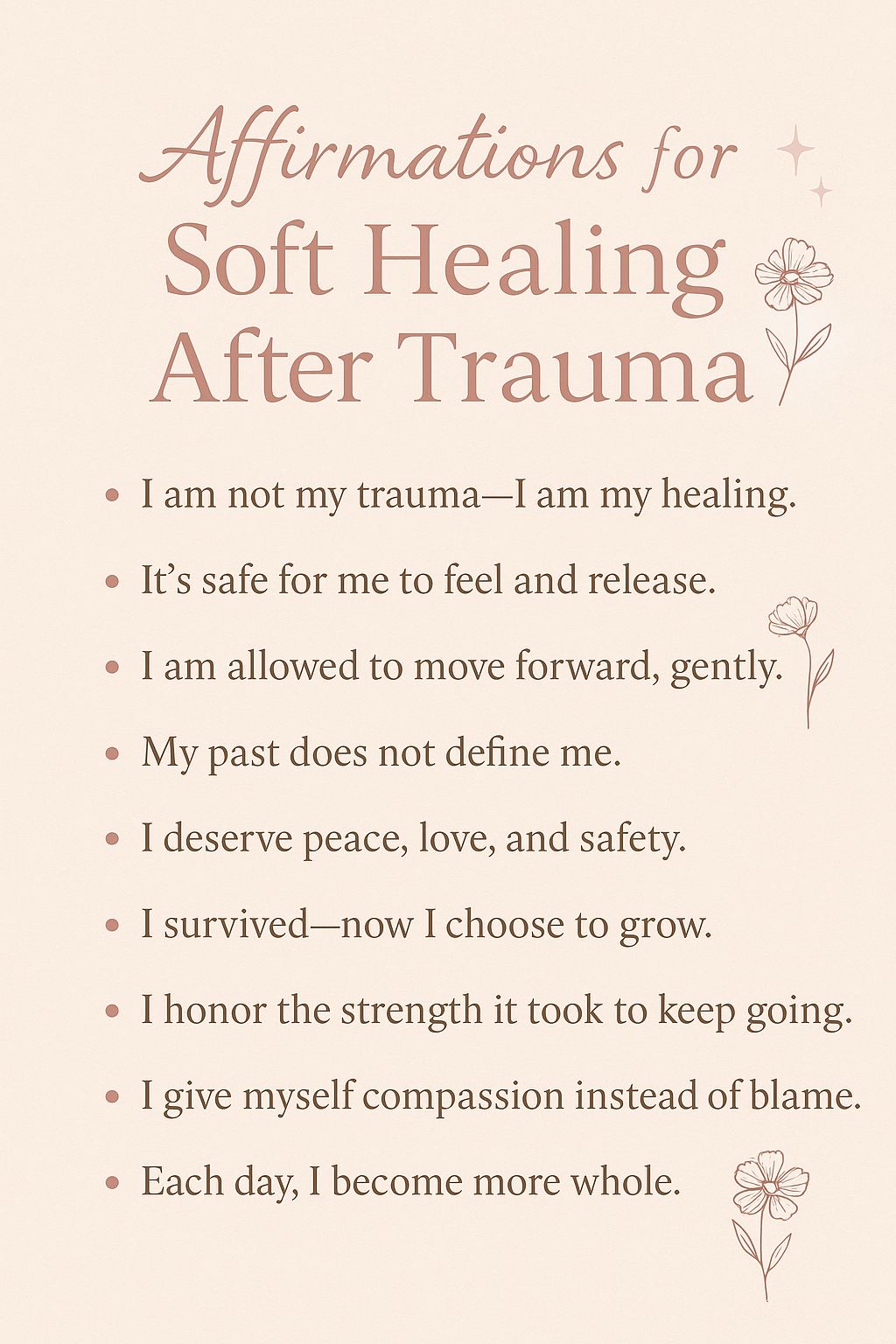
You realize that your pain is not your identity.
It is an experience that left an imprint — one that can be understood, softened, and gradually released.
You are not broken.
You are someone who adapted.
And now, with awareness, you can choose again.
Not from fear…
but from understanding.
And that is where real freedom begins