Trauma is not always loud or visible.
To understand what is trauma and how it affects your life, we need to look beyond obvious pain and notice the subtle ways it shapes your thoughts, emotions, and behaviour.
Trauma, in simple words, is an emotional wound.
Just like the body gets injured when something physically hurts it, the mind and heart also get injured when something too painful, shocking, or overwhelming happens — and we are not able to process it at that time.
It is not only about what happened, but about how helpless, unsafe, or alone a person felt in that moment.
Basic Understanding of Trauma
Trauma happens when an experience is:
Too much to handle emotionally
Too sudden or frightening
Too painful to understand at that age or state of mind
The nervous system goes into survival mode — fight, flight, freeze, or shut down.
If the feelings are not expressed, understood, or healed, the experience does not end… it stays stored inside.
That stored pain becomes trauma.
Trauma is Not the Event — It’s the Impact
Two people can go through the same situation:
One moves on
The other carries fear, shame, or pain for years
Many people think trauma is only about big events, but what is trauma and how it affects your life is often hidden in small, repeated emotional experiences.
Why?
Because trauma is about the inner effect, not just the outer event.
For example:
Being ignored as a child
Constant criticism
Betrayal in love
Emotional neglect
Sudden loss
Abuse (emotional, physical, or mental)
Even if others say, “It’s not a big deal,” the body and heart may still feel wounded.
What Trauma Feels Like Inside
A person with trauma may not always remember the original event clearly, but they may feel:
Overreacting to small things
Fear of abandonment
Trust issues
Feeling “not enough”
Sudden anxiety or emotional numbness
Difficulty feeling safe even in good situations
This happens because the body is still trying to protect you from a danger that already passed.
The Most Important Thing to Know
Trauma is not weakness.
It is the mind and body’s way of surviving something that felt unbearable.
It shows that: You endured something difficult.
You adapted to survive.
You did the best you could with the awareness you had.
And the beautiful truth is —
what was learned in pain can be unlearned in safety.
Healing is possible because trauma is stored in the nervous system, and the nervous system can be gently retrained.
In One Line
Trauma is unprocessed emotional pain that stays in the body and influences how we see the world, ourselves, and relationships — until it is healed.
This is where many people misunderstand themselves.
They judge their reactions without knowing that those reactions may be coming from old pain, not their true nature.
How Does Unhealed Trauma Affect Behaviour ?
“Unhealed trauma doesn’t make you bad — it makes you act from pain instead of wisdom.”
This is one of the most important truths about human behavior.
When a person is carrying emotional wounds, their reactions are not coming from their true nature — they are coming from their survival system.
A calm, wise, soul- centred person acts from:
understanding
balance
patience
clarity
But a person with unhealed trauma acts from:
fear
insecurity
abandonment pain
shame
anger stored in the body
So their actions may look “wrong,” but the root is not evilness — it is unprocessed hurt.
Pain narrows perception.
Wisdom expands perception.
Trauma keeps a person in reaction mode, not conscious response mode.
They are not choosing from the soul…
They are reacting from an old wound that still feels alive.
How Can I Find the Root Cause of My Trauma?
When you start exploring what is trauma and how it affects your life, you begin to realise that its roots are often much deeper than the present moment.
Trauma is rarely loud. It doesn’t sit in your memory like a clear story with a beginning and end. Instead, it hides under layers of personality, habits, fears, and emotional reactions.
That’s why finding the root is not about thinking harder — it’s about feeling deeper.
Try this gently, without pressure.
Close your eyes and remember a time in life when you felt naturally light — maybe childhood play, a moment of love, laughter, or simple peace.
Notice how your body feels when you remember that. That softness, that openness, that sense of ease — that is close to your original emotional state.
Now notice something important.
When you try to live with that same openness today, something may feel different.
Maybe there is hesitation, tightness in the chest, fear of being too open, or a feeling that it’s “not safe” to be that free anymore.
That inner resistance is not random.
That tightness in the heart, fear in the body, or hesitation in your thoughts is often an emotional memory — a trace of a moment when something felt too overwhelming, too painful, or too lonely for you to handle at that time.
The root of trauma is often hidden in moments where:
you felt alone in pain and had no one to comfort you
you felt unseen or unheard
you felt rejected or compared
you felt unsafe expressing your true feelings
Often, the root of trauma is not a single dramatic event, but an emotional atmosphere you grew up in.
Maybe your feelings were dismissed. Maybe love felt conditional. Maybe you had to be strong too early.
At that time, you didn’t have the awareness or support to process what you felt.
So your system stored the experience as a silent memory in the body — a signal that certain emotions or situations are “not safe.”
Finding the root is about gently asking: “When did I first start feeling this way?”
Not to blame your past, but to understand the younger version of you who adapted to survive.
Because before you learned to protect yourself, you were simply a child responding to your environment.
And when you begin to see that, compassion replaces self-judgment — and that is where real healing begins.
What Is Trauma and How It Affects Your Life Without You Realising It?
Trauma is subtle.
It doesn’t always show up as dramatic breakdowns.
Most of the time, it becomes your normal way of being.
It slips into your thoughts as:
“I shouldn’t trust too much.”
“I need to be careful.”
“I must not get hurt again.”
And you don’t notice this as fear — you call it personality.
Without realising, trauma starts:
shaping your choices
limiting your dreams
affecting who you feel safe with
making you overthink or shut down
You may think, “This is just how I am.”
But often, it’s just how you learned to protect yourself.
Trauma builds emotional walls quietly. And because they protect you from pain, you don’t notice they are also blocking joy.
How Trauma Quietly Blocks Your Joy
Trauma builds emotional walls quietly.
And because those walls protect you from pain, you don’t immediately notice that they are also blocking joy.
When you shut down to avoid disappointment, you also shut down excitement.
When you avoid attachment to prevent heartbreak, you also block deep love.
When you stop trusting to protect yourself, you also prevent connection.
Protection and openness cannot exist at the same level at the same time.
The same heart that feels pain is the heart that feels joy.
So when we numb one, we unintentionally numb the other.
This is why trauma doesn’t just limit suffering — it limits aliveness.
And that is often the quietest loss of all.
This is exactly how what is trauma and how it affects your life quietly shapes your reality without you even noticing.
Signs Trauma Is Still Affecting You Without You Realising
Sometimes the clearest sign that trauma is operating quietly is emotional intensity.
When a small situation creates a very big reaction — deep fear, sudden anger, strong withdrawal — it is often not about the present moment alone.
It is the past echoing through it.
And because these reactions feel automatic, we assume, “This is just who I am.”
But many times, it is not your true nature speaking — it is an old protection still trying to keep you safe.
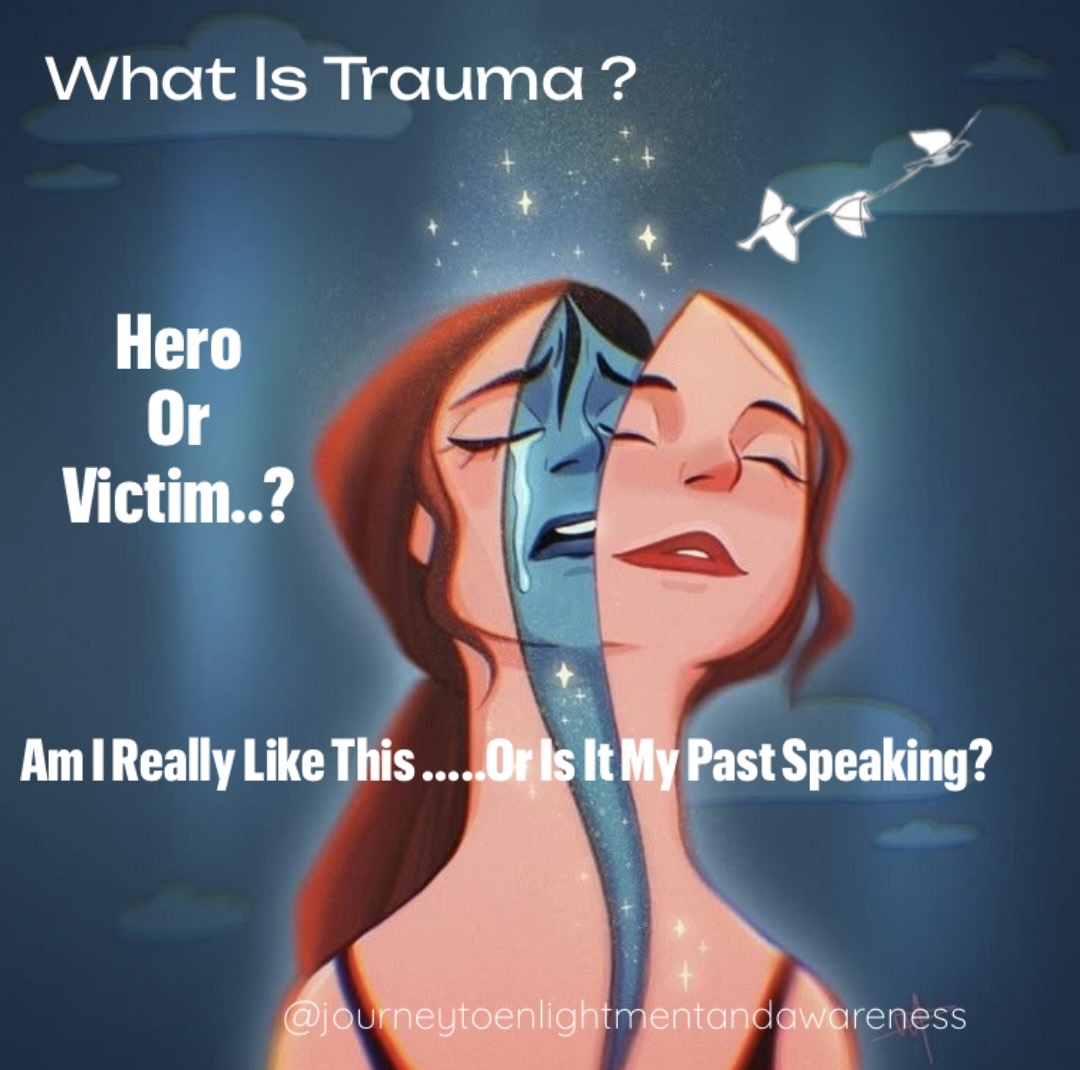
The moment you begin to question, “Is this really me, or is this an old wound reacting?” — awareness begins.
And awareness is the beginning of change.
How Do I Recognise Trauma Patterns in My Life?
Understanding what is trauma and how it affects your life becomes clearer when you start observing your own patterns.
This is where awareness turns into healing.
Take a notebook and sit in silence. Not to judge yourself — but to observe.
Ask gently:
What kind of relationships do I keep entering again and again?
Where do I overgive and feel drained?
What do I fear losing the most?
What situations make me react more than the moment deserves?
Patterns are emotional fingerprints.
They always lead back to an earlier moment where your heart felt something deeply and decided, “I must never feel this again.”
Go back in memory, not to relive pain, but to understand it.
Find the moment where:
you first felt not enough
or abandoned
or silenced
or emotionally alone
That was the moment your system built protection.
And what you call “personality” today might actually be that old protection still running your life.
Recognising this is not weakness.
It is the first step of emotional freedom.
How Do I Know I Have the Power to Change My Life After Trauma?
One of the biggest illusions trauma creates is the feeling of helplessness.
When something painful happens and we don’t know how to handle it, the mind quietly decides, “I have no control.
Life just happens to me.”
But this is not truth — this is a survival conclusion.
Healing actually begins the moment you understand one simple shift:
You may not have chosen what happened to you, but you are still choosing how you live now.
Trauma makes you feel like a side character in your own story.
Awareness reminds you that you are still the author.
This doesn’t mean forcing positivity.
It means realising that your reactions, boundaries, healing steps, and future direction are still in your hands.
That understanding alone brings back inner strength — and strength is the soil where healing starts growing.
How Can I Transform Trauma into Personal Strength?
To begin making sense of how trauma shapes our journey, let’s step back for a moment and look at life in a different way.
Imagine your life as an epic movie — not an ordinary one, but a meaningful, adventurous story where you are the central character.
In this story, you are the hero or heroine, born to face challenges, obstacles, and adversities that come your way.
Just like in every movie, the story only becomes powerful because of the struggles. Without challenges, there is no growth, no transformation, no depth.
Now pause and ask yourself:
In this story of your life… are you choosing to be the hero, or are you unknowingly living as the victim?
Because this choice changes everything.
When we watch movies, we admire the hero. We cheer for them when life becomes difficult. We trust that no matter how hard the situation is, they will rise, learn, and overcome it.
But when it comes to our own life, we forget that we carry that same strength within us.
We start believing that our pain, our past, and our experiences have made us weak… instead of seeing that they are the very situations that can make us stronger.
The truth is, your life is no different from that story.
The obstacles you face are not there just to break you. They come with the potential to teach you something, to shape you, and to move you one step closer to your own evolution.
But what usually happens is this:
Instead of understanding our experiences, we start absorbing them as pain.
Moments that hurt us — emotionally, physically, or psychologically — are not processed with awareness. They stay within us. And slowly, they turn into trauma.
And when trauma is not understood, we don’t see it as something we went through…
We start seeing it as who we are.
We begin to protect ourselves, to hold back, to fear, to avoid. And without even realising it, we start living not as the hero of our story… but as someone who feels controlled by what happened.
This is where the shift happens:
From hero… to victim of circumstances.
But the truth is — that role is not fixed.
Just like in every powerful story, there is always a turning point.
The hero does not rise because life became easy.
The hero rises because they choose to face what is difficult.
In the same way, you also have the ability to face your fears, to understand your trauma, and to stop letting your past define your present.
Not by forcing yourself…
But by becoming aware.
When you start looking at your reactions, your fears, and your patterns with honesty — without judgment — you begin to understand yourself.
And the moment understanding comes, you are no longer stuck in unconscious reactions.
You begin to respond differently.
You begin to see differently.
You begin to live more consciously.
And slowly, your story starts changing.
You are no longer just carrying your trauma…
You are transforming it.
With every step of awareness, you become stronger, wiser, and more resilient. Not because the s, past disappeared, but because it no longer controls you.
And that is what it truly means to become the hero of your own life.
Not someone who never felt pain…
But someone who did not let that pain decide their entire story.
Conclusion
Your life is not just a series of events that happened to you.
It is a story that is still being written.
Your past may have shaped parts of you, but it does not have the final say in who you become.
Within you, there is still a space that is aware, conscious, and capable of choosing differently.
And the moment you start seeing your life from that awareness, you move out of unconscious patterns and step into a more free, intentional way of living.
You don’t have to become perfect.
You don’t have to heal everything at once.
You just have to begin seeing.
Because the moment you choose awareness…
you begin to step back into your true role —
the hero of your own story.
When you truly understand what is trauma and how it affects your life, you stop seeing yourself as broken and start seeing yourself as someone who is learning to heal and grow.