
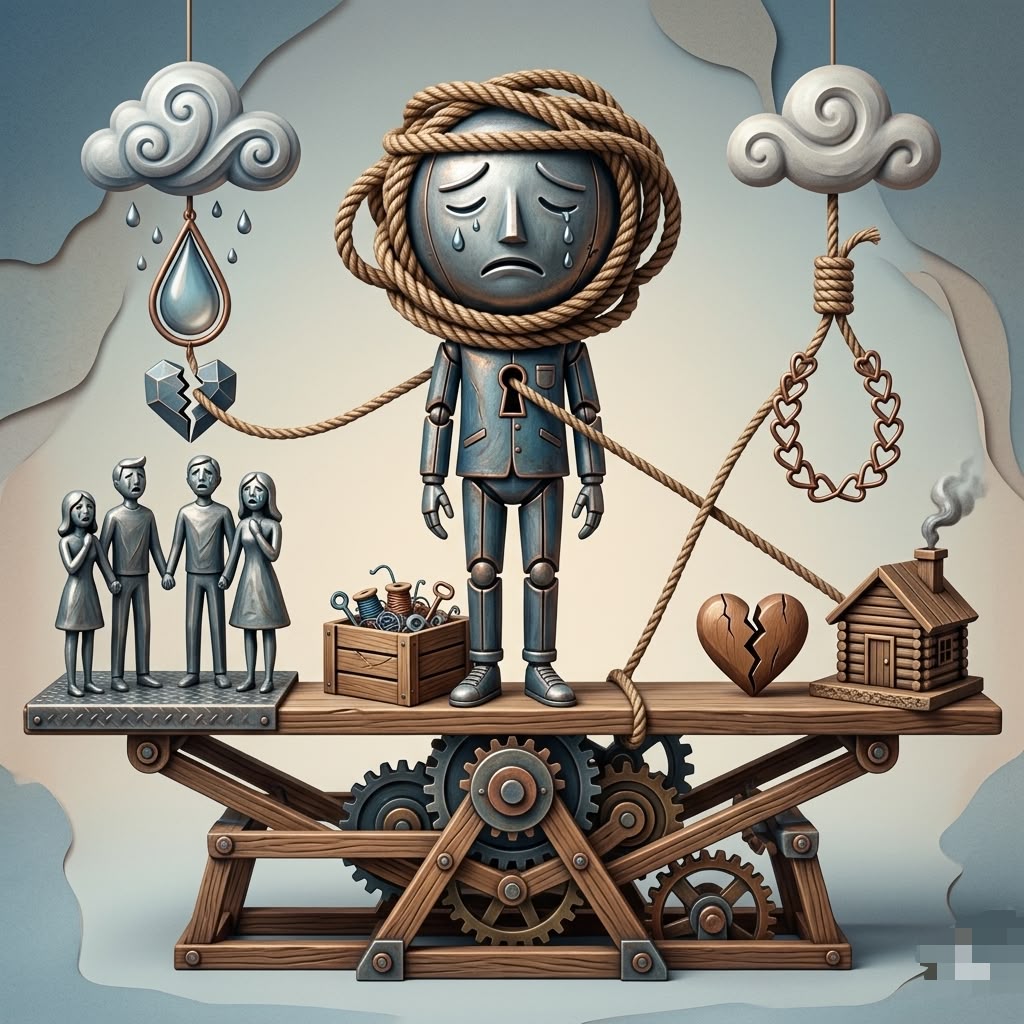
Trauma Bonding Explained: Why Some Relationships Feel Impossible to Leave
Trauma bonding is one of the most misunderstood relationship experiences because it often feels completely opposite to what logic tells us. You may know a relationship is hurting your peace, draining your energy, or keeping you stuck in the same emotional cycle, yet a part of you still feels connected to it. This confusion is not a sign of weakness. It is a sign that something deeper than simple attraction may be influencing the attachment.
What Is Trauma Bonding?
Trauma bonding is a psychological attachment that develops when periods of emotional pain, uncertainty, or mistreatment are repeatedly followed by moments of relief, affection, reassurance, or connection. Over time, the brain can become strongly attached to the cycle itself, making the relationship feel difficult to leave even when it causes ongoing distress.
Researchers often associate trauma bonding with patterns of intermittent reinforcement, where unpredictable rewards strengthen emotional attachment more powerfully than consistent rewards.
What Makes Trauma Bonding So Confusing?
Most unhealthy relationships are expected to end when the pain becomes greater than the happiness. Yet studies in relationship psychology consistently show that emotional attachment does not always follow rational decision-making. This is why many people remain emotionally invested in relationships they openly admit are making them unhappy. The conflict is not simply between staying and leaving. The conflict is between what a person understands intellectually and what they continue to feel emotionally.
Why Are More People Searching About Trauma Bonding Today?
Mental health professionals have seen growing awareness around trauma bonding because many people are beginning to recognize patterns that traditional relationship advice often fails to explain. They are no longer asking only whether a relationship is healthy or unhealthy. They are asking a deeper question: why does an unhealthy relationship sometimes feel harder to leave than a healthy one? This shift has made trauma bonding one of the most searched relationship psychology topics in recent years.
Why Intelligence and Self-Awareness Are Not Always Enough
One of the biggest myths surrounding trauma bonding is the belief that intelligent people should easily recognize and leave unhealthy situations. Research suggests otherwise. Emotional attachment operates through processes that are often separate from conscious reasoning, which is why highly educated, emotionally aware, and otherwise confident individuals can still find themselves struggling with attachments that no longer serve them.
Understanding the Real Question Behind Every Trauma Bond
Although every story is different, most people who experience trauma bonding eventually arrive at the same realization. The real struggle is often not about understanding the relationship itself. The real struggle is understanding why the attachment feels so powerful in the first place. Until that question is answered, many people continue searching for explanations in the wrong places.
What You Will Learn in This Article
Understanding trauma bonding becomes much easier when it is approached step by step. In the sections ahead, we will explore why painful relationships can sometimes feel like love, why people often return even after deciding to leave, what science says about breaking the cycle, and how to recognize the signs that genuine emotional freedom is finally beginning.
Because healing does not start when you stop missing someone.
It starts when you finally understand what you were truly attached to.
Why Do I Miss Someone Who Hurt Me? 4 Reasons Trauma Bonding Feels Like Love
Missing someone who hurt you does not automatically mean the relationship was healthy or that you should return. Trauma bonding often creates emotional attachments that feel like love even when the relationship repeatedly causes distress. The confusion arises because the brain can associate relief, attention, and emotional intensity with connection, making unhealthy patterns feel deeply meaningful.
Understanding that distinction is the first step toward understanding why letting go can feel so difficult.
1. Why Relief Can Feel Like Genuine Connection
One reason trauma bonding feels so powerful is that moments of relief are often mistaken for moments of love. When tension, distance, or conflict is followed by affection, reassurance, or attention, the emotional relief can feel incredibly meaningful. The mind naturally associates the return of comfort with emotional closeness.
Over time, this can make brief positive moments seem far more significant than they actually are, creating the impression of a deep connection where there may simply be temporary relief from distress.
2. Why Emotional Intensity Is Often Mistaken for Compatibility
Many people believe strong emotions automatically indicate a strong relationship. In reality, emotional intensity and emotional compatibility are not the same thing. Research in relationship psychology has consistently found that healthy long-term relationships are more strongly associated with stability, trust, and emotional safety than with constant emotional highs and lows.
When a relationship creates continuous emotional activation, the intensity itself can be misinterpreted as evidence that the bond is special, unique, or irreplaceable.
3. Why Unpredictability Can Feel Like Passion
Human attention naturally focuses on uncertainty. When affection becomes inconsistent, the mind often becomes more focused on obtaining it.
This reaction is not simply emotional. Research on variable-ratio reinforcement, the same reward pattern used in gambling systems, found that unpredictable rewards produce significantly greater behavioural persistence than predictable rewards, even when the total reward remains the same.
In other words, uncertainty often increases attachment rather than weakening it, which helps explain why inconsistent affection can sometimes feel more compelling than consistent care.
4. Why Attention Is Not Always the Same as Love
One of the most important distinctions in trauma bonding is the difference between receiving attention and receiving consistent love. Attention can feel exciting, validating, and emotionally stimulating. Love, however, is measured through reliability, respect, emotional safety, and consistency over time.
When attention arrives in powerful bursts, it can create the illusion of deep affection even when the overall relationship lacks the qualities necessary for genuine emotional wellbeing.
The Truth Behind the Confusion
This is why trauma bonding can feel so convincing. The attachment is not imaginary. The emotions are not fake. The connection often feels real because the experiences themselves are real. The misunderstanding happens when emotional relief is mistaken for love, intensity is mistaken for compatibility, unpredictability is mistaken for passion, and attention is mistaken for genuine care. Once these distinctions become clearer, an important question naturally emerges:
If the relationship is not providing what we truly need, then why do so many people continue returning to it even after recognising the pattern?
Why Is It So Hard to Leave Someone Who Hurts You? 5 Mental Loops That Keep Trauma Bonds Alive
Knowing a relationship is unhealthy and actually leaving it are often two different experiences. Trauma bonding can remain powerful even after a person recognizes the pattern because emotional attachment is reinforced by habits, memories, hope, and psychological investment. This often creates a painful question: if I know the relationship is hurting me, why do I keep returning to it?
The answer is rarely a lack of intelligence or willpower. More often, it is a set of powerful psychological loops that quietly keep the attachment alive long after the relationship has proven itself unreliable.
1. Why Future Promises Can Feel More Powerful Than Present Reality
One of the strongest forces in trauma bonding is the tendency to become attached to potential rather than reality. When someone repeatedly promises change, growth, commitment, or a better future, the mind naturally begins investing in that future version of the relationship. Over time, hope can become stronger than evidence.
Instead of evaluating what is consistently happening today, attention becomes focused on what might happen tomorrow. The relationship is no longer judged by its current reality but by a future that has not yet arrived.
2. Why The More You Invest, The Harder It Feels To Walk Away
Human beings naturally struggle to let go of something they have spent significant time, energy, and emotion trying to build. Psychologists refer to this as the sunk cost effect, a cognitive bias that encourages people to continue investing in something because of what has already been invested.
Research examining committed relationships found that participants were significantly more likely to stay in an unhappy relationship when prior effort and investment had already been made. The findings support the sunk cost effect, where past investments continue influencing present decisions even when future outcomes appear unfavourable.
3. Why Your Mind Remembers The Good More Than The Bad
Memory is not a perfect recording device. It is selective. During periods of loneliness, grief, or emotional vulnerability, the mind often highlights positive memories while minimizing painful ones. This selective recall can create the illusion that the relationship was better than it actually was.
Instead of remembering the entire pattern, attention becomes concentrated on isolated moments of affection, connection, or happiness. As a result, the attachment feels justified even when the broader reality tells a different story.
4. Why Hope Can Become Emotionally Addictive
Hope is one of the most beautiful human qualities, but in unhealthy relationships it can sometimes become a trap. Every small improvement, apology, affectionate message, or temporary change can reignite the belief that lasting transformation is finally happening.
Hope becomes especially powerful when people are emotionally invested in a desired outcome. In a study published in Psychological Science, researchers Cade Massey, Joseph Simmons, and David Armor found that people often maintain optimistic expectations even when repeated experience provides evidence that those expectations should be reduced.
The researchers called this phenomenon “hope over experience,” showing that desired outcomes can continue influencing expectations despite contradictory evidence. This helps explain why some people remain attached to the possibility of change long after the relationship has repeatedly demonstrated the same pattern.
5. Why You May Be Attached To The Story More Than The Person
Perhaps the most overlooked reason people return is that they become attached to a personal story they have created around the relationship. The story may include ideas about destiny, unfinished chapters, soulmate connections, future happiness, or finally receiving the love they have been waiting for. Over time, this internal narrative can become more powerful than the actual relationship itself.
The attachment shifts away from who the person consistently is and becomes focused on who we believe they could eventually become.Often, healing begins the day you stop asking why they changed and start asking why you stayed despite the pattern.
The Real Reason You Keep Going Back to Someone Who Hurt You
When people blame themselves for returning, they often assume the problem is weakness. In reality, these psychological loops can quietly influence perception, memory, decision-making, and hope. Future promises keep attention focused on tomorrow. Emotional investment makes letting go feel costly. Selective memory softens the painful parts of the story. Hope keeps possibility alive. Personal narratives transform potential into perceived reality.
The danger is that these loops rarely keep a relationship frozen in place. More often, they keep people investing years of emotional energy into a cycle that continues to produce the same disappointment, confusion, and self-doubt. What begins as hope can slowly become a barrier that prevents healing, growth, and healthier connections from entering your life.
Understanding these loops does not immediately break a trauma bond, but it does reveal an important truth: returning is often less about love and more about the powerful mental patterns that keep the attachment alive. Once those patterns become visible, the next question naturally follows:
How do you actually break a trauma bond when your mind has been reinforcing it for so long?
How Do You Break a Trauma Bond? 5 Science-Backed Steps That Actually Help You Move Forward
Understanding trauma bonding can be eye-opening, but awareness alone is rarely enough to create change. Many people can clearly see the pattern, identify the emotional loops, and recognize the damage being caused, yet still feel emotionally attached. This is because trauma bonding is not simply a thought pattern.
It is a pattern reinforced through emotions, habits, memories, and nervous-system responses. Breaking that cycle requires more than insight. It requires creating new experiences that teach your mind and body a different definition of safety, connection, and love.
1. How Do You Stop Romanticising the Relationship and See It Clearly?
The first step is learning to separate facts from feelings. Trauma bonds often survive because the mind repeatedly replays emotional highs while minimizing repeated disappointments. One practical way to challenge this pattern is through structured trauma-focused journaling. Unlike ordinary diary writing, guided reflection encourages you to document recurring behaviours, emotional triggers, and relationship patterns in a way that is difficult for memory to distort later.
Research led by psychologist James Pennebaker found that individuals who engaged in structured emotional writing across multiple sessions reported measurable improvements in emotional processing and psychological wellbeing. In other words, putting experiences into clear language helps the brain organize them more accurately rather than endlessly reliving them.
2. How Do You Reduce the Emotional Pull When You Miss Them?
One of the biggest mistakes people make is assuming that missing someone automatically means they belong in their life. In reality, emotional cravings often behave more like habits than evidence. Instead of treating every wave of longing as a sign to reconnect, it helps to treat it as information. Notice it. Name it. Allow it to pass without acting on it. Over time, this teaches the brain that every emotion does not require a response.
This approach is closely aligned with mindfulness-based therapies, which have repeatedly shown benefits for emotional regulation and reduced rumination. The goal is not to suppress feelings. The goal is to stop allowing feelings to control decisions.
3. How Do You Teach Your Nervous System That Calm Is Safe?
Many people leaving trauma bonds discover something surprising: healthy interactions initially feel unfamiliar. After becoming accustomed to emotional highs and lows, stability can feel strangely uncomfortable. This is why nervous-system regulation becomes an essential part of recovery.
Some individuals find it helpful to use guided breathing tools that provide visual pacing cues and structured breathing exercises during moments of emotional overwhelm. These tools do not heal trauma on their own, but they can help train the body to tolerate calmness instead of constantly seeking stimulation. The more often the nervous system experiences safety without chaos, the easier it becomes to recognize healthy connection when it appears.
4. How Do You Create New Standards for Love and Relationships?
A trauma bond weakens when you stop asking whether someone is exciting and start asking whether they are emotionally safe. Healthy relationships are built on consistency, respect, accountability, and trustworthiness. Creating written relationship standards can be surprisingly powerful because it shifts decision-making away from temporary emotions and toward long-term values.
This is where many people discover that they were not lacking love. They were lacking standards that protected their wellbeing. Once those standards become clear, relationships that once seemed irresistible often begin to look very different.
5. How Do You Stop Confusing Attachment With Love?
Perhaps the most important shift is learning that attachment and love are not the same thing. Attachment can exist alongside anxiety, confusion, and emotional exhaustion. Love, at its healthiest, creates space for growth, peace, honesty, and mutual respect.
This idea is echoed in the Bhagavad Gita, where Lord Krishna teaches that clarity arises when attachment no longer controls perception. The teaching is not about becoming cold or detached from life. It is about seeing reality as it is rather than as we desperately wish it to be. When viewed through that lens, healing is not the loss of love. It is the removal of illusion.
What Actually Changes a Trauma Bond?
Breaking a trauma bond is rarely a single decision. It is a series of small decisions repeated consistently over time. Seeing reality clearly weakens fantasy. Managing emotional cravings weakens compulsion. Training the nervous system weakens dependence on chaos. Creating healthier standards weakens unhealthy attraction. Learning the difference between attachment and love weakens the bond itself.
The process may feel slow, but every step moves you closer to something many people in trauma bonds have been searching for all along: a relationship that feels peaceful not because you settled, but because it is genuinely safe.
Conclusion
Perhaps the most important truth about trauma bonding is that it does not keep people trapped because they are weak. It keeps them trapped because the attachment feels meaningful, even when the pattern is harmful.
That is why healing begins with awareness.
Not awareness of the other person, but awareness of what the relationship has been teaching you to accept, chase, and believe about love.
The moment you stop asking, “How do I make this work?” and start asking, “Is this truly healthy for me?” the entire direction of your life begins to change.
Because the strongest relationships are not the ones that create the most emotional intensity.
They are the ones that allow you to feel safe, respected, valued, and at peace.