
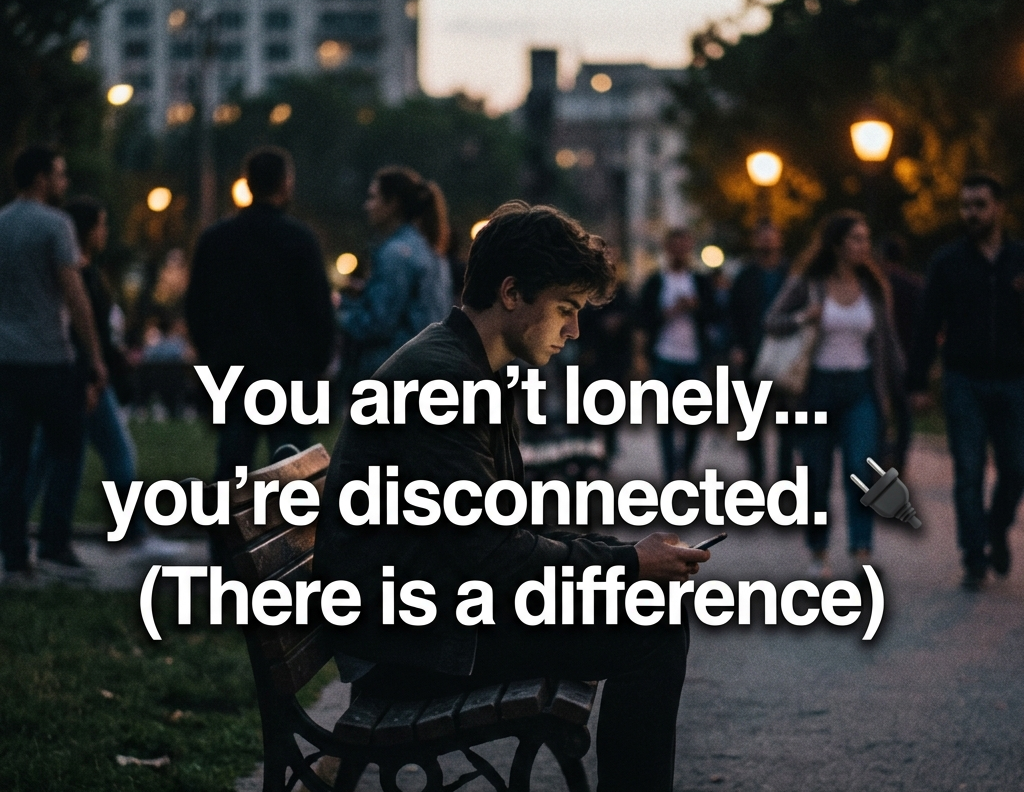
Why Do I Feel Lonely Even When I Am Surrounded by People? 5 Reasons Loneliness Can Exist Even When You Are Not Alone
Feeling lonely even when surrounded by people is one of the most confusing emotional experiences many individuals face today. You may have friends, family, coworkers, or social interactions throughout the day, yet still feel emotionally disconnected inside. This happens because loneliness is not simply the absence of people. It is often the absence of meaningful connection, understanding, belonging, or emotional fulfillment.
Many people quietly carry the feeling that they are present in conversations but not truly understood, included in relationships but not deeply known, surrounded by people yet emotionally alone. This experience has become so common that the World Health Organisation and researchers around the world have identified loneliness as a growing global concern affecting emotional well-being, physical health, and overall quality of life.
The important thing to understand is that feeling lonely does not automatically mean you lack people in your life. In many cases, it means something deeper is happening beneath the surface of your relationships and emotional experiences.
1. Why Can You Feel Lonely Even When You Are Not Physically Alone?
Most people associate loneliness with isolation, but psychology research has repeatedly shown that loneliness and solitude are not the same thing.
A person can spend an entire weekend alone and feel peaceful, while another person can spend every day surrounded by others and still experience a persistent sense of emptiness. Researchers often describe loneliness as the gap between the connection we have and the connection we genuinely need.
This is why simply increasing the number of people around you does not always solve the problem. The human heart is not only looking for company. It is looking for understanding, trust, and emotional resonance.
2. Why Do Some People Feel Unseen in Their Closest Relationships?
One of the most common questions people ask is why loneliness can exist even inside friendships, families, and romantic relationships.
The answer is that being loved and feeling understood are not always the same experience.
Many individuals spend years discussing schedules, responsibilities, daily events, and practical matters while rarely sharing what is actually happening inside them emotionally. Over time, a relationship may continue functioning normally, yet a person can still feel unseen because their fears, hopes, struggles, and deeper thoughts remain unspoken.
Research on emotional intimacy consistently shows that relationship satisfaction is influenced not only by communication frequency but also by the depth and authenticity of those conversations.
3. Why Does It Feel Like Nobody Truly Understands Me?
Another hidden source of loneliness comes from the belief that other people only know a carefully edited version of who we are.
Many people learn to present the version of themselves that feels safest, most acceptable, or least likely to be judged. They share achievements but hide insecurities. They discuss opinions but avoid vulnerabilities. They remain socially present while emotionally guarded.
The result is a strange emotional contradiction. People may appreciate you, respect you, or even love you, yet a part of you still feels unknown.
When the authentic self remains hidden, loneliness often grows because the connection people have is with the version being presented rather than the person underneath it.
4. Why Does Modern Social Life Sometimes Feel Emotionally Empty?
Modern life offers more opportunities to connect than any previous generation has experienced. Yet many researchers have observed that increased connectivity does not always produce increased closeness.
Messages, notifications, group chats, and social platforms allow constant interaction, but they often encourage speed rather than depth. Conversations become shorter. Attention becomes divided. Meaningful reflection becomes rare.
As a result, many people experience a growing number of interactions while simultaneously experiencing fewer moments of genuine emotional connection.
This helps explain why someone can be socially active, regularly engaged with others, and still wonder why they feel lonely at the end of the day.
5. Is Feeling Lonely Around People More Common Than Most People Realise?
The answer is yes.
According to a global Meta-Gallup survey spanning more than 140 countries, nearly one in four adults reported experiencing significant loneliness. The findings highlighted that loneliness is not limited to people who live alone or lack relationships. Many participants reported feeling lonely despite being surrounded by family members, coworkers, classmates, or social networks.
What makes loneliness particularly difficult is that it often remains invisible. People rarely announce it openly. Instead, they continue smiling, working, socializing, and functioning while privately wondering why something still feels incomplete.
And that is precisely why feeling lonely even when surrounded by people should not be viewed as a personal failure or weakness.
It is often a signal that your emotional needs are asking for something deeper than proximity. They are asking for understanding, authenticity, belonging, and connection that feels genuinely meaningful.
Understanding that distinction is where the journey toward solving loneliness truly begins.
5 Hidden Reasons You Can Feel Lonely Even When Surrounded by People
By now, it becomes easier to see that feeling lonely even when surrounded by people is not always caused by a lack of relationships. In many cases, the deeper issue is that certain emotional needs are not being met within those relationships.
This is why two people can have the same number of friends, the same level of social activity, and similar lifestyles, yet experience connection very differently. The difference often lies in the quality of emotional connection rather than the quantity of social interaction.
Understanding these hidden reasons can help explain why loneliness continues to appear even when there are people present in your life.
1. Are You Surrounded by Conversation but Starved of Genuine Connection?
One of the most overlooked causes of loneliness is the difference between communication and connection.
Many daily conversations revolve around responsibilities, schedules, work, entertainment, and routine updates. While these interactions help maintain relationships, they do not always create emotional closeness.
Research published in psychological science has repeatedly shown that people tend to experience greater well-being and stronger relationship satisfaction when conversations move beyond surface topics and include meaningful personal sharing.
When most interactions stay at a practical level, a person may feel socially engaged yet emotionally disconnected. The relationship exists, but the deeper sense of connection never fully develops.
2. Have Social Media Interactions Replaced Meaningful Relationships?
Modern technology has made staying connected easier than ever, yet researchers continue to find that excessive passive social media use is often associated with increased loneliness and reduced life satisfaction.
The reason is simple.
A nine-year longitudinal study published in Personality and Social Psychology Bulletin followed thousands of adults and found that both passive social media use, such as scrolling through content, and active social media use, such as posting and engaging online, were associated with higher loneliness over time. The researchers concluded that digital interaction often fails to provide the same emotional fulfillment created through meaningful face-to-face relationships.
Watching other people’s lives is not the same as participating in meaningful relationships.
A person can spend hours scrolling through updates, stories, and posts while receiving very little genuine emotional support or understanding in return. The brain experiences constant social exposure, but the emotional need for authentic connection remains unmet.
This is one reason many people report feeling more connected online while simultaneously feeling more alone in real life.
3. Are You Constantly Performing Instead of Being Yourself?
Many people unknowingly build relationships around acceptance rather than authenticity.
They become the reliable one, the cheerful one, the strong one, or the successful one because those versions of themselves feel safer to present to the world.
Over time, however, constantly managing an image can create emotional distance. People may appreciate the role you play without ever knowing the person behind it.
Even Fame and Success Do Not Eliminate Emotional Loneliness
This helps explain why loneliness is often reported by celebrities, entertainers, athletes, and highly successful individuals despite being surrounded by admiration and attention.
Psychologists have long observed that public recognition does not automatically create genuine connection. When people primarily know a public image rather than the real person behind it, feelings of loneliness can persist even in the middle of success.
Research published in the Review of General Psychology found that authenticity and the ability to express one’s true self are strongly associated with psychological well-being, while living behind a socially constructed identity often increases emotional strain and disconnection.
In other words, being seen is not the same as being known. A person can receive attention from millions and still feel lonely if very few people truly know who they are beneath the role they perform.
4. Have Past Emotional Hurts Made It Difficult to Fully Connect?
Not all loneliness begins in the present.
Sometimes it is shaped by experiences from the past.
Disappointment, betrayal, rejection, criticism, or broken trust can quietly influence how much emotional access we allow others to have. Without realizing it, people may start protecting themselves from future pain by becoming more cautious, guarded, or emotionally reserved.
This protective response is understandable, but it can also create unintended distance.
The desire for connection remains, yet the fear of vulnerability prevents relationships from reaching the depth required to satisfy that need.
As a result, loneliness can persist even when trustworthy people are already present.
5. Are You Looking for Belonging in Places That Cannot Truly Provide It?
Human beings do not simply want interaction. They want belonging.
Psychologists describe belonging as the feeling of being accepted, valued, understood, and emotionally safe within a group or relationship.
The problem is that not every environment is capable of providing that experience.
A person may spend years trying to fit into social circles, workplaces, communities, or relationships that do not align with their values, personality, or emotional needs. The effort to belong continues, but the feeling never arrives.
Research on belongingness suggests that people thrive when they experience genuine acceptance rather than constant adaptation.
Sometimes loneliness is not telling you that nobody cares about you.
Sometimes it is revealing that you are searching for connection in places where your authentic self cannot comfortably exist.
And once that reality becomes visible, the question shifts from “Why am I lonely?” to “Where can I build relationships that allow me to be fully myself?”
That shift is often where meaningful connection begins.
5 Signs Your Emotional Needs May Be Going Unnoticed
By this point, you may already understand that feeling lonely even when surrounded by people is not always caused by being physically alone. You may also understand some of the hidden reasons that create this experience.
But how do you know whether emotional loneliness is actually affecting your life?
The answer is often found in small patterns that appear so gradually that many people overlook them. These signs do not necessarily mean something is wrong with you. Instead, they often reveal that important emotional needs such as understanding, belonging, authenticity, and meaningful connection are not being fully met.
1. Do You Feel Drained After Socializing Instead of Fulfilled?
Many people assume loneliness means avoiding social situations. Yet one of the clearest signs of emotional loneliness is feeling unexpectedly empty after spending time with others.
You attend gatherings, participate in conversations, and stay socially active, but instead of feeling recharged, you return home feeling emotionally depleted.
The issue is not the amount of interaction. The sign itself is that social activity consistently fails to create a lasting sense of connection.
This happens because emotional energy is restored through meaningful connection, not simply through social activity. When interactions remain superficial or emotionally disconnected, people often leave with less energy than they started with.
Research published in the Journal of Personality and Social Psychology has shown that deeper conversations tend to create greater feelings of happiness, connection, and life satisfaction than frequent surface-level interactions.
2. Do You Feel Like You Have Plenty of Contacts but Few People You Could Call at 2 A.M.?
One of the clearest signs of emotional loneliness is realizing that many people know you, yet very few truly feel available when life becomes difficult.
Your contact list may be full. Your social calendar may be active. Yet when you imagine facing a personal crisis, only a handful of names, or perhaps none at all, come to mind.
The difference between being socially connected and emotionally supported often becomes visible in moments when you genuinely need someone.
3. Do You Feel More Connected to Content Than to People?
Modern life has created a surprising emotional shift.
Many individuals now spend more time listening to podcasts, watching creators, following online communities, consuming videos, or engaging with digital content than having meaningful conversations with people in their daily lives.
As a result, some people begin feeling more emotionally understood by a favorite author, creator, speaker, or online community than by the individuals physically present around them.
Researchers at the University of Buffalo found that parasocial relationships, one-sided emotional bonds formed with media personalities, creators, or celebrities, can temporarily satisfy belonging needs. However, the study also found that these connections cannot fully replace mutual human relationships where emotional support, vulnerability, and genuine interaction flow both ways.
This helps explain why someone may feel deeply connected to a podcast host, author, content creator, or online community while still experiencing loneliness in everyday life.
4. Do You Secretly Wish Someone Would Ask How You Really Feel?
Perhaps one of the most revealing signs of emotional loneliness is the quiet desire to be genuinely known.
Not simply asked how your day was.
Not simply asked whether everything is fine.
But sincerely invited to share what is happening beneath the surface.
Many people carry thoughts, fears, dreams, disappointments, and emotions they rarely express because few conversations ever move beyond practical topics.
A landmark study led by psychologists Roy Baumeister and Mark Leary identified belongingness as a fundamental human motivation. Their research concluded that people have a deep psychological need to form meaningful and lasting interpersonal bonds, making the desire to be understood and emotionally known far more than a social preference. It is a core human need.
5. Do You Feel Like Nobody Really Knows the Current Version of You?
One of the less obvious signs of emotional loneliness is the feeling that people are interacting with an outdated version of who you are.
Friends may know who you were five years ago. Family members may see you through old roles and expectations. Even long-term relationships can sometimes continue based on assumptions formed years earlier.
Meanwhile, your beliefs, priorities, struggles, and goals may have changed significantly.
Research on identity development shows that people continue evolving throughout adulthood. Yet many relationships fail to evolve at the same pace.
As a result, you may feel surrounded by people who know your history but do not fully understand the person you have become today.
This can create a unique form of loneliness where connection exists, familiarity exists, and relationships exist, yet the feeling of being genuinely known remains missing.
Recognizing these signs is powerful because awareness turns an invisible problem into a visible one. And once emotional loneliness becomes visible, it becomes much easier to address in a healthy and intentional way.
How Do You Stop Feeling Lonely When You Have People Around You? 5 Research-Backed Ways to Rebuild Real Connection
Recognizing emotional loneliness can be uncomfortable because it reveals a gap that many people spend years trying to ignore. Yet awareness is also where change begins. If you have found yourself wondering why you feel lonely even when surrounded by people, the goal is not to collect more relationships.
The goal is to create more meaningful connection, both with yourself and with others. Research shows that loneliness becomes easier to overcome when people focus on connection quality rather than social quantity.
1. Can You Create One Relationship Where Honesty Feels Safer Than Perfection?
Many people spend years trying to maintain relationships while hiding their fears, struggles, disappointments, or insecurities. The result is often a connection that looks healthy from the outside but feels incomplete on the inside.
A long-running body of relationship research led by psychologist has consistently highlighted that vulnerability plays a central role in creating trust, belonging, and meaningful human connection. Emotional closeness grows when people feel safe enough to be real rather than impressive.
Instead of trying to be understood by everyone, focus on building deeper honesty with one trusted person. A single authentic relationship often reduces loneliness more effectively than dozens of surface-level interactions.
2. Are You Waiting for Deeper Conversations or Intentionally Creating Them?
One reason loneliness persists is that many people hope meaningful conversations will happen naturally. In reality, deeper connection often begins when someone is willing to ask a different kind of question.
Research conducted by psychologist found that structured self-disclosure and thoughtfully guided questions can significantly increase feelings of closeness between people, including strangers. His famous relationship studies demonstrated that meaningful connection often develops through intentional conversation rather than chance.
If opening up feels uncomfortable, start with shared experiences rather than immediate vulnerability. A weekly walk, a hobby group, a game designed around meaningful questions, or even a simple one-on-one coffee conversation can create opportunities for deeper connection without making either person feel pressured.
In many cases, meaningful relationships are not found. They are gradually built through small but intentional interactions.
3. Have You Forgotten to Build a Relationship With Yourself?
Many people try to solve loneliness exclusively through other people.
Yet psychologists increasingly distinguish between social loneliness and self-disconnection. A person may be surrounded by relationships and still feel empty if they rarely spend time understanding their own emotions, needs, values, or inner experiences.
Research on self-awareness and psychological well-being has repeatedly found that individuals with greater emotional awareness tend to experience stronger resilience and healthier relationships.
This is why practices such as reflective writing, mindful walks, quiet contemplation, creative expression, or moments of intentional solitude can be powerful. They help rebuild familiarity with the person whose company matters most throughout life: yourself.
4. Could Purpose Be the Missing Piece Behind Your Loneliness?
Not all loneliness comes from a lack of connection. Sometimes it comes from a lack of meaning.
A large study published in the Journal of Psychology and Aging found that individuals who reported a stronger sense of purpose also reported lower levels of loneliness and greater psychological well-being. Purpose creates a feeling of belonging to something larger than immediate circumstances.
This may involve mentoring others, volunteering, supporting a community initiative, caring for animals, developing a meaningful skill, or contributing to a cause that genuinely matters to you.
Connection becomes stronger when people are united by shared meaning rather than simple proximity.
5. What Happens When You Strengthen Your Connection With the Divine?
This connection does not begin with elaborate rituals. It begins with presence.
Sometimes it is as simple as speaking honestly to God about what you are carrying, expressing gratitude, sharing your confusion, or sitting quietly with the feeling that you do not have to face every struggle alone.
What makes this relationship unique is that it is not based on achievement, popularity, appearance, or social approval. It is rooted in the belief that you are already known, already heard, and already valued.
This idea is beautifully reflected in the ancient Sanskrit verse:
“Tvameva Mata Cha Pita Tvameva, Tvameva Bandhu Cha Sakha Tvameva, Tvameva Vidya Dravinam Tvameva, Tvameva Sarvam Mama Deva Deva.”
The verse describes God not as a distant force, but as every relationship the human heart ultimately seeks: a loving parent, a trusted friend, a companion, a guide, and a source of strength.
For this reason, spiritual connection has helped countless people navigate loneliness throughout history. It offers a sense of belonging that does not depend on how many people surround you, but on the quiet reassurance that you are never truly alone.
Conclusion: The Real Opposite of Loneliness
Feeling lonely even when surrounded by people is not always a sign that you need more relationships. Often, it is a sign that you need deeper connection, greater authenticity, and a stronger sense of belonging.
The goal is not to fill every quiet moment or eliminate loneliness completely. The goal is to build a life where meaningful relationships, self-understanding, purpose, and faith create a lasting sense of connection.
Because the real opposite of loneliness is not being surrounded by people.
It is feeling genuinely connected to yourself, to others, and to what truly matters.