Why Toxic Relationship Signs Are Becoming Harder to Recognise in Modern Society
Toxic relationship signs are increasingly difficult to recognize today because unhealthy emotional patterns often appear in socially acceptable or normalized forms rather than obvious conflict or visible abuse.
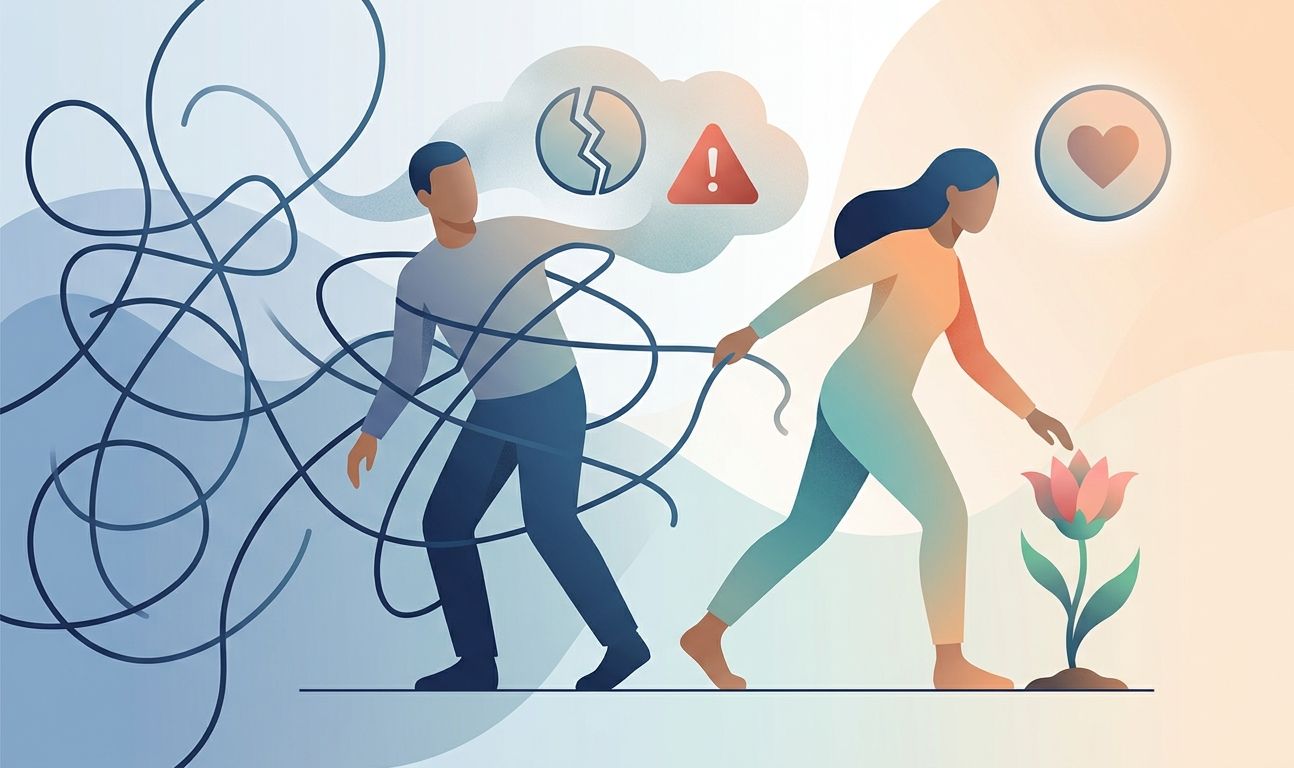
Modern relationship dynamics often involve subtle psychological patterns such as emotional unpredictability, silent control, guilt-based communication, and intermittent reinforcement. Over time, these patterns condition the nervous system to confuse emotional intensity with emotional safety, reducing clarity in judgment and self-perception.
Studies in behavioral psychology and relationship science show that gradual exposure to emotional inconsistency can reduce self-trust and increase tolerance toward unhealthy behavior patterns.
In daily life, this leads to situations where people normalize emotional exhaustion, reduced communication, fear-based silence, or constant self-adjustment inside relationships while still labelling them as “normal love.”
Someone starts rehearsing conversations before speaking because they already know certain topics will trigger conflict. Someone stops sharing opinions to “keep the peace.” Someone begins feeling relief during distance rather than comfort during closeness.
None of these moments look dramatic from outside. But over time, they slowly reshape how a person thinks, communicates, and functions daily.
Why Society Often Rewards Endurance More Than Awareness
One major reason unhealthy relationships continue longer than they should is social conditioning.
Society often normalises emotional endurance by promoting ideas such as “adjustment is maturity” or “every relationship requires sacrifice,” which can blur the line between healthy effort and emotional self-neglect.
Some of these statements contain truth. Long-term relationships do require patience, accountability, and effort.
The problem begins when endurance becomes more important than discernment.
According to mental health experts, repeated exposure to emotionally destabilizing environments can gradually affect confidence, decision-making ability, stress regulation, and self-perception. Yet many people continue minimizing serious behavioral patterns because the relationship still appears functional externally.
That normalisation is one of the most overlooked relationship problems in modern culture.
The Digital Era Has Also Distorted Relationship Expectations
Social media has changed how many people evaluate relationships psychologically.
Online spaces reward visibility, appearance, validation, and performative closeness. As a result, many unhealthy relationships remain hidden behind curated images and selective public presentation.
Digital environments intensify emotional confusion by increasing attachment insecurity, strengthening validation dependency, and encouraging constant comparison with curated versions of relationships online.
This creates another layer of confusion.
People may begin comparing their real-life emotional struggles with carefully edited online portrayals that reveal very little about private reality. In some situations, individuals remain trapped in unhealthy environments partly because they fear social embarrassment, judgment, or appearing like they “failed” publicly.
Why Discernment Matters More Than Ever in Modern Relationships
Perhaps this is why spiritual teachings from Satyuga and ancient wisdom traditions placed so much importance on discernment, self-awareness, discipline, and conscious relationship choices from the beginning of life.
Many people today are entering serious emotional commitments without fully understanding:
healthy boundaries,
manipulation patterns,
emotional accountability,
controlling behavior,
or even the early signs of toxic relationships.
That lack of awareness quietly creates long-term emotional consequences people often recognize far too late.
Modern society teaches people how to attract attention, gain validation, and chase emotional intensity very quickly. But far fewer conversations teach people how to protect mental clarity, recognize unhealthy behavioral patterns early, or build relationships that feel emotionally stable in the long run.
Many relationships appear stable in public life while privately functioning through emotional instability, silent tension, and unspoken survival patterns that remain invisible to others.
And once people begin observing modern society carefully, it becomes difficult to ignore how many individuals are silently surviving emotionally unhealthy environments while still calling it “normal life.”
4 Overlooked Reasons Why Many People Stay in Emotionally Unhealthy Relationships for Years
1. Public Normalcy Often Hides Private Emotional Survival
One of the most uncomfortable realities about modern relationships is that many unhealthy environments still appear completely functional from the outside.
People continue attending family gatherings together. Pictures still get uploaded. Daily responsibilities still get completed. Conversations remain polite in public spaces.
That external normalcy is exactly why many toxic relationship signs remain unnoticed for years, sometimes even by close relatives and friends.
In many situations, the relationship is not surviving because both people are emotionally secure and connected. It is surviving because both individuals have silently adapted themselves to tension, instability, avoidance, or fear-based communication patterns over time.
And eventually, constant emotional management starts replacing genuine emotional safety.
2. Fear of Social Judgment Keeps Many People Stuck Longer Than They Admit
Relationship decisions are rarely emotional alone. Social pressure plays a major role too.
Fear of social judgment, emotional loneliness, financial uncertainty, and the discomfort of starting over often keep individuals inside relationships longer than their emotional well-being can sustain.
According to relationship and behavioral studies, fear-based decision-making often increases when people feel emotionally dependent, socially isolated, or financially uncertain. In long-term unhealthy relationships, this pressure can slowly normalize silence and emotional suppression.
This is one reason some individuals continue defending situations privately that they would immediately recognize as unhealthy if happening to someone else.
3. Emotional Adaptation Can Make Dysfunction Feel Familiar
Human beings psychologically adapt to repeated environments faster than they realize.
A person who once felt shocked by controlling behavior may eventually start adjusting daily routines around it. Someone who once expressed opinions freely may begin filtering conversations carefully to avoid arguments, criticism, or emotional unpredictability.
Over time, survival behaviors start looking normal internally.
This psychological adjustment process is one reason emotionally unhealthy environments can continue quietly for years without dramatic outward collapse. The relationship may still appear “stable” while both people are functioning inside constant emotional exhaustion underneath.
That distinction matters far more than modern society acknowledges openly.
4. Modern Society Often Celebrates Endurance Without Questioning the Cost
One of the more dangerous cultural patterns today is the tendency to praise endurance automatically without examining what a person is actually enduring.
Commitment is valuable. Patience matters. Long-term relationships naturally require responsibility and effort.
But staying inside an environment that repeatedly damages mental stability, confidence, decision-making ability, or self-respect should not automatically be romanticized as maturity.
Perhaps this is why conversations around relationship awareness are becoming increasingly important today. People do not only need relationship advice. They also need the ability to recognize when a relationship has quietly shifted from mutual growth into emotional survival.
And once someone begins noticing that difference clearly, many modern relationship dynamics start looking very different than they once did.
What Emotionally Unhealthy Relationships Often Look Like Behind Closed Doors
Behind closed doors, emotionally unhealthy relationships often look very different from the image presented to friends, family, or social media. What appears ordinary from the outside can sometimes involve a pattern of behaviors that gradually erode a person’s sense of safety, confidence, and self-worth.
Chronic criticism, emotional manipulation, isolation, humiliation, intimidation, and, in some cases, physical abuse can become normalised over time, making it even harder for those experiencing them to recognise how deeply they are being affected.
Research from the Centers for Disease Control and Prevention shows that more than 61 million women and 53 million men in the United States have experienced psychological aggression from an intimate partner during their lifetime, including behaviours linked to control, intimidation, humiliation, and emotional manipulation
And perhaps the most dangerous part is that many of these realities continue for years while society still keeps calling it: “adjustment,” “relationship struggles,” “family matters,” or “normal married life.”
Some people are not living inside romantic relationships anymore.
They are living inside emotional survival cage systems.
Many Human Beings Are Entering Adult Life Emotionally Unprepared for the Realities of This World
A large 2025 survey by the Youth Endowment Fund in England and Wales found that nearly 39% of teenagers reported experiencing emotional or physical abuse within intimate relationships, including behaviors such as phone monitoring, location tracking, emotional manipulation, and appearance-based criticism. Researchers connected these patterns to growing concerns around relationship education, boundaries, and emotional awareness among younger generations.
Many people grow up believing love naturally means safety.
But the harsh reality is that not everybody entering somebody’s life carries emotional maturity, wisdom, stability, or good intentions.
Some people carry deep anger. Some carry manipulation. Some carry control issues. Some carry emotional emptiness. And some unconsciously spread suffering into every environment they enter.
And this is exactly why so many people realize these truths painfully late in life, after already emotionally losing years of themselves inside environments that were slowly damaging them from within.
Sometimes I genuinely think about this personally too.
I learned many of these truths later in life myself. And honestly, that realization changes the way you begin observing the modern world completely.
Because once awareness truly enters your life, you start realizing how many people around you are silently making life-changing decisions while emotionally carrying no real guidance at all.
When Emotional Suffering Becomes Normal: Why So Many People Have Lowered Their Standards for Peace
One of the saddest things happening in modern society is how deeply emotional suffering has been normalised.
People have started treating:
• emotional safety like unrealistic expectations,
• . loyalty without respect like love,
• and emotional exhaustion like maturity.
But human beings were never meant to lower their standards this deeply.
A conscious human life was never supposed to revolve around constantly surviving emotional instability, fear, manipulation, disrespect, or unsafe environments while pretending everything is normal.
Choosing safety is also your divine right.
And perhaps the moment more people truly remember this, entire generations may finally begin making healthier, wiser, and more conscious life decisions than the ones society normalised for so long.
3 ways Healing Usually Begins When People Stop Ignoring Their Own Reality
1. Self-Trust Often Gets Damaged Long Before People Fully Realize It
One of the lesser-discussed effects of emotionally unhealthy environments is how slowly they can weaken self-trust.
Individuals in emotionally unstable environments often begin second-guessing their reactions, over-apologising to avoid conflict, and questioning whether their emotional concerns are valid or exaggerated.
Psychologists often refer to this pattern as self-doubt conditioning, where repeated emotional invalidation gradually makes people trust external reactions more than their own internal judgment. This is one reason many individuals remain stuck in unhealthy dynamics longer than they expected originally.
And honestly, rebuilding self-trust later becomes just as important as recognizing the unhealthy environment itself.
2. Why Small Daily Changes Matter More Than Dramatic Motivation
One common mistake people make after difficult relationships is believing recovery happens through one major life decision alone.
In reality, behavioral researchers consistently find that long-term psychological stability is more strongly connected to repeated daily patterns than short bursts of emotional motivation.
Emotional recovery becomes more stable when supported by consistent daily habits such as structured routines, improved sleep cycles, reduced exposure to conflict, and reconnecting with emotionally supportive environments and spending time in spaces that feel mentally calmer rather than psychologically exhausting.
These changes may appear small externally, but repeated daily environments shape mental functioning far more deeply over time than many people realize.
3. Why Awareness Alone Is Not Enough Without Different Decisions
Awareness matters. But awareness without behavioral change often keeps people emotionally trapped in the same cycle.
A person can recognize unhealthy dynamics clearly and still continue tolerating them out of fear, dependency, confusion, guilt, or uncertainty about the future.
That is why healthier futures are usually built through repeated practical decisions, not temporary emotional realizations alone.
Sometimes the most important shift is not dramatic at all.
It is simply reaching the point where someone stops constantly abandoning their own mental stability just to maintain external normalcy for everyone else.
And honestly, that shift changes far more than most people initially realize.
Why the Life You Build Determines the Relationships You Accept
A Better Future Is Usually Built Through Practical Daily Decisions
One of the biggest misunderstandings about personal growth is the belief that awareness alone automatically changes life.
In reality, long-term stability is usually shaped through everyday systems, environments, and decisions people repeatedly return to after awareness enters their life.
Behavioural psychology research consistently shows that human environments influence habits, stress levels, emotional regulation, productivity, and decision-making patterns far more deeply than motivation alone. This is one reason lifestyle reconstruction matters after emotionally unhealthy experiences.
Sometimes the goal is not simply “moving on.”
Sometimes the goal is building a life that no longer normalise emotional instability in the first place.
Why Independence Changes Relationship Standards Completely
One major shift many people experience after gaining awareness is realizing how deeply practical independence affects emotional decision-making.
Financial stability, career development, structured routines, and personal competence often influence relationship choices more than people initially recognize.
This is why many therapists and behavioral experts encourage people recovering from chronically stressful environments to rebuild:
financial confidence,
long-term goals,
social support systems,
practical life skills,
and personal structure alongside emotional recovery itself.
As individuals develop greater financial and emotional independence, their tolerance for unhealthy relationship dynamics simply out of fear, dependency, confusion, or survival pressure naturally decreases and their standards for emotional safety become clearer.
Perhaps Modern Society Needs Higher Relationship Standards Again
One of the clearest realisations many people eventually reach is that emotionally stable relationships should not feel unrealistic or rare.
Respect should not feel exceptional. Consistency should not feel suspicious. Calm communication should not feel boring. And basic psychological safety should never feel like an impossible standard.
Yet modern relationship culture has normalized instability so deeply that many people now mistake exhaustion, unpredictability, and emotional survival for ordinary relationship experiences.
Perhaps this is why awareness matters so much today.
Because once people stop normalising unhealthy environments internally, they often begin making very different decisions externally too.
Final Conclusion
Modern society has made relationship advice widely available, yet genuine discernment still remains surprisingly rare.
Real love was never supposed to feel like constant emotional survival in the first place.
Because sometimes the most life-changing decision a person makes is finally refusing to betray their own inner safety anymore.
But awareness changes future decisions.
Once people begin recognizing unhealthy patterns clearly, rebuilding stronger relationships standards that no longer require constant emotional survival to maintain. Because emotionally stable relationships were never unrealistic expectations. Perhaps they were simply standards society stopped protecting carefully enough.