What Is a Wounded Inner Child and Why Do So Many Adults Carry One?
If you have ever felt emotionally exhausted despite achieving things you once wanted, struggled to feel truly secure in relationships, or carried a persistent sense that something is missing even when life appears fine on the surface, you are not alone.
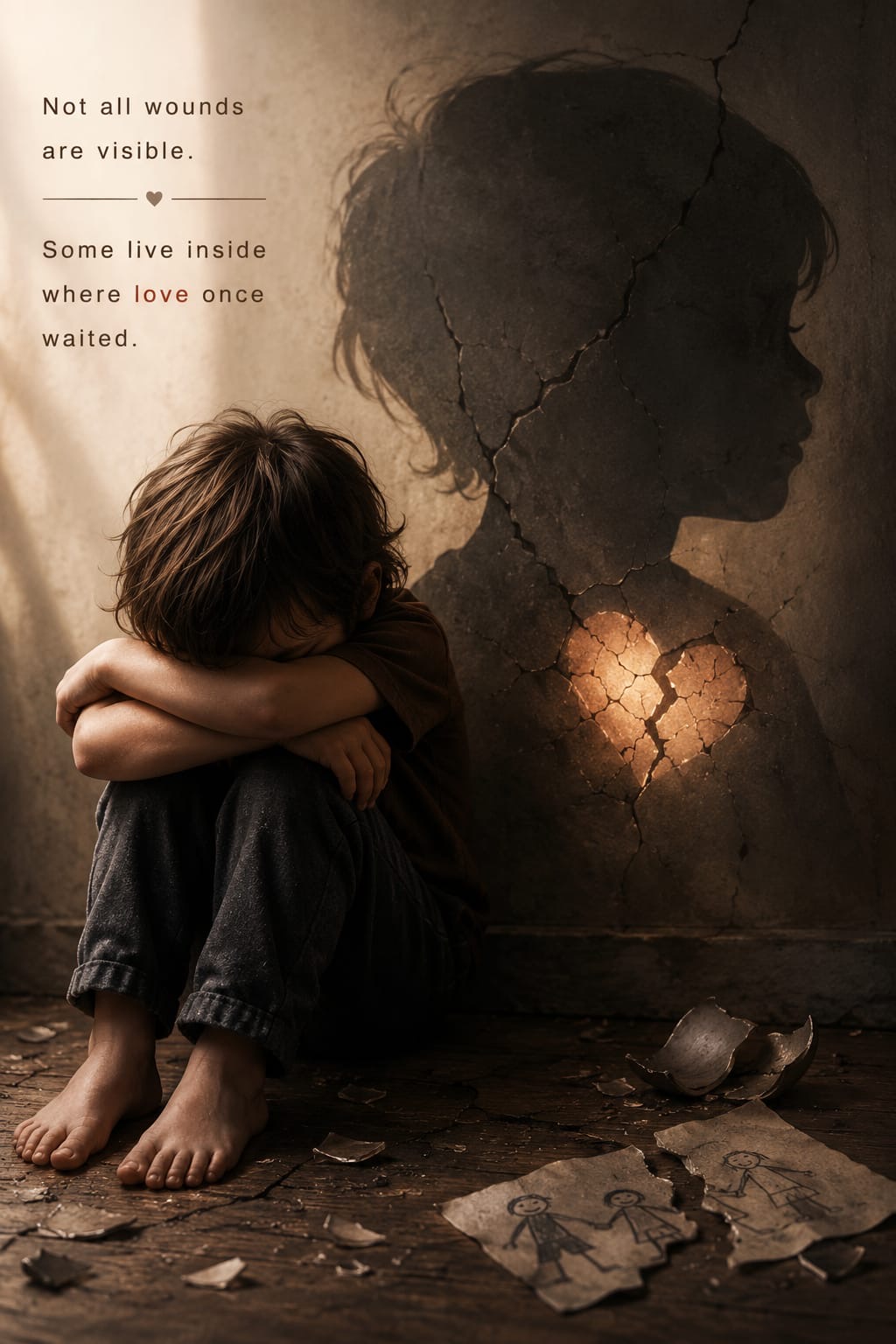
A Wounded Inner Child refers to unresolved emotional experiences, unmet emotional needs, or protective coping patterns that developed during childhood and continue influencing thoughts, emotions, relationships, and self-perception in adulthood. Many adults carry these patterns without realizing it because early emotional experiences can become deeply ingrained ways of responding to the world.
The concept of a Wounded Inner Child has gained growing attention because it helps explain experiences that many adults find difficult to put into words. While the term may sound spiritual or symbolic, modern psychology increasingly recognizes that early emotional experiences can continue influencing thoughts, emotions, and behaviours long into adulthood.
Why Do Some Emotional Struggles Feel Older Than the Present Moment?
Many people assume that anxiety, insecurity, people-pleasing, or emotional sensitivity begin in adulthood because that is when the symptoms become visible. However, developmental psychology suggests that some emotional patterns can originate much earlier. Research in attachment theory has consistently shown that early caregiver-child interactions play a significant role in shaping emotional regulation, self-perception, and relationship expectations later in life.
Neuroscience suggests that repeated childhood experiences help create automatic emotional pathways in the brain. Over time, these pathways can become default responses to stress, rejection, criticism, or connection, causing adult reactions to feel immediate and familiar even when the original childhood circumstances are no longer present.
What makes these patterns difficult to recognize is that they often feel normal. When an emotional response has been repeated for years, the mind can mistake familiarity for identity, making it harder to question where the pattern truly came from.
What Does the Term “Wounded Inner Child” Actually Mean?
A Wounded Inner Child does not refer to a literal child living inside an adult. It is a psychological concept used to describe unresolved emotional needs, beliefs, or coping patterns that developed during childhood and continue influencing adult life. In simple terms, it represents the part of a person that learned how to adapt, protect itself, or seek connection during emotionally significant experiences.
Researchers studying adverse childhood experiences have found that early emotional environments can affect stress responses, mental health outcomes, and interpersonal functioning decades later, highlighting how deeply formative these years can be.
How Common Are Childhood Emotional Wounds?
Far more common than many people realize. One of the largest public health studies ever conducted on childhood adversity, the Adverse Childhood Experiences Study, found that nearly two-thirds of participants reported at least one significant adverse childhood experience, while many reported multiple experiences.
Researchers have also linked unresolved childhood adversity to higher risks of anxiety, depression, relationship difficulties, and chronic stress in adulthood. These findings suggest that emotional wounds are not rare exceptions but experiences shared by millions of people across different cultures and backgrounds.
Why Is This Topic Becoming So Important Today?
Mental health professionals are increasingly recognizing that understanding emotional patterns is often more effective than simply reacting to them. Many adults become highly skilled at managing responsibilities, maintaining relationships, and functioning in daily life while remaining disconnected from the deeper emotional forces influencing their decisions.
Psychologists often describe awareness as the first step in pattern change because emotional habits cannot be intentionally changed until they are consciously recognized.
Before a pattern can be changed, it usually has to be understood. That understanding begins by recognising that some struggles may have roots deeper than the present moment.
What Causes a Wounded Inner Child? 3 Childhood Experiences That Often Leave Lasting Emotional Wounds
Most people do not develop a Wounded Inner Child because of one dramatic event. More often, it forms through repeated emotional experiences that quietly shape how a child understands love, safety, and self-worth.
Research in developmental psychology has consistently shown that children do not simply grow physically. They build internal beliefs about themselves and the world based on how their emotional needs are handled during their earliest years. Understanding these experiences is important because emotional wounds rarely appear without a source.
1. How Does Emotional Neglect Create a Wounded Inner Child?
Emotional neglect is not always obvious. A child may have food, shelter, education, and physical care while still feeling emotionally unseen. When emotions are regularly ignored, dismissed, or left unexplored, children often learn that their inner experiences are unimportant.
Researchers studying Childhood Emotional Neglect have found that the absence of emotional responsiveness can affect emotional awareness, self-esteem, and relationship development later in life. What makes emotional neglect particularly difficult to recognize is that it often involves something missing rather than something happening. The wound is created not by constant criticism, but by the lack of emotional connection that a child naturally needs.
2. Can Conditional Love Affect a Child’s Sense of Worth?
Children naturally look to caregivers for signals about their value. When love feels strongly connected to performance, obedience, achievements, or meeting expectations, a child may begin associating worth with approval rather than identity. Psychological research on self-worth development suggests that children who experience highly conditional acceptance are more likely to base their value on external validation rather than internal confidence.
Over time, the message becomes subtle but powerful: “I am valued when I perform well.” The problem is not discipline or guidance. The problem begins when acceptance feels earned rather than consistently felt.
3. What Happens When a Child’s Emotions Are Frequently Invalidated?
Every child experiences fear, sadness, disappointment, embarrassment, and frustration. These emotions are normal parts of human development. Difficulties arise when those emotions are repeatedly minimized, mocked, criticized, or dismissed. Studies in emotional development have shown that validation plays a significant role in helping children understand and regulate their feelings.
When emotional experiences are consistently rejected, children may learn to distrust their own emotional reality. Instead of understanding what they feel, they begin questioning whether their feelings are acceptable at all. Over time, this creates a foundation where emotional expression becomes associated with discomfort rather than safety.
Can Parenting Shape a Child’s Emotional Future?
For this reason, child development experts often emphasize that parenting is not simply the management of a child’s physical needs. It is also the ongoing process of shaping the emotional foundation from which that child will eventually understand themselves, others, and the world around them.
When that foundation consistently supports emotional safety, understanding, and connection, it helps children develop a healthier sense of self. When important emotional needs remain unmet, those experiences can quietly become part of the unresolved patterns many psychologists today describe as the wounded inner child.
Understanding those early influences is not about assigning blame. It is about recognizing where certain emotional patterns may have begun so they can be understood more clearly.
What Are the Signs of a Wounded Inner Child? 5 Patterns That Often Follow People Into Adulthood
Many people assume they would immediately recognize a Wounded Inner Child if they had one. In reality, these patterns often feel so familiar that they become part of everyday life. The challenge is that unresolved childhood wounds rarely announce themselves directly. Instead, they tend to appear through repeated emotional reactions, relationship patterns, and self-perceptions that seem normal until they are examined more closely.
Research in attachment psychology suggests that early emotional experiences can continue influencing behaviour long after the original experiences have been forgotten, making these signs surprisingly common among adults.
1. Why Do You Constantly Seek Approval From Others?
One of the most common signs of a Wounded Inner Child is a strong dependence on external validation. Compliments, praise, or reassurance may provide temporary relief, yet the feeling rarely lasts. Studies on contingent self-esteem have found that individuals who rely heavily on external approval often experience greater emotional instability and lower long-term self-worth.
The deeper issue is not a desire to be appreciated. It is the belief that personal value must be confirmed by someone else before it can be felt internally.
2. Why Does Rejection Feel More Painful Than It Should?
Everyone experiences rejection at some point. However, people carrying unresolved emotional wounds often experience rejection as something much larger than the situation itself. Research using brain imaging has shown that social rejection activates some of the same neural regions associated with physical pain.
For some individuals, a delayed message, criticism, or disagreement can trigger emotional intensity that feels disproportionate to the present moment because the experience is touching something deeper than the immediate event.
3. Why Do Small Situations Trigger Strong Emotional Reactions?
Emotional triggers are often clues rather than problems. A simple comment, misunderstanding, or moment of feeling ignored can sometimes create a reaction that seems stronger than expected. Psychologists increasingly view emotional triggers as indicators of unresolved emotional learning rather than signs of weakness.
What appears to be an overreaction is often an old emotional pattern becoming active in a new situation. This is one reason self-awareness practices have become central to modern emotional health research.
4. Why Is It So Difficult to Feel Truly Good Enough?
Many adults carrying a Wounded Inner Child live with a quiet feeling that they are always falling short of who they should be. Even after achieving goals, meeting responsibilities, or receiving appreciation from others, the feeling rarely disappears for long. Research on self-worth development has found that early emotional experiences can significantly influence how people evaluate themselves throughout adulthood.
Instead of seeing mistakes as normal parts of growth, they often experience them as evidence that something is wrong with them. As a result, confidence becomes dependent on circumstances rather than rooted in a stable sense of self-worth.
5. Why Is Receiving Love Sometimes Harder Than Giving It?
For some people, showing care, support, and kindness to others feels natural, yet accepting those same things for themselves feels surprisingly uncomfortable. Genuine affection may be questioned. Compliments may be dismissed. Support may feel undeserved. Attachment research suggests that early emotional experiences help shape a person’s expectations about love, trust, and emotional safety.
When those expectations become connected to uncertainty or inconsistency, receiving love can feel unfamiliar even when it is sincere. The result is not an inability to love others, but a difficulty fully believing that the same care can safely be received in return.
How Can You Start Recognising These Patterns More Clearly?
Recognizing a Wounded Inner Child often begins with observation rather than immediate change. Many people spend years assuming their reactions, fears, and emotional habits are simply part of who they are. The challenge is that patterns become easier to see only when we intentionally step back and examine them.
Resources such as an inner child healing guide can help readers better understand how unresolved childhood experiences continue influencing emotions and behavior. Awareness does not solve every problem, but it often provides the clarity needed to finally recognize what has been operating beneath the surface for years.
How Do You Heal a Wounded Inner Child? 4 Practical Steps to Break Old Patterns and Build Emotional Stability
Recognizing a Wounded Inner Child is important, but awareness alone does not create change. Many people spend years understanding their patterns without ever transforming them. Research published in the Journal of Consulting and Clinical Psychology has consistently shown that lasting emotional change requires both self-awareness and repeated behavioral practice. The goal is not to erase the past. The goal is to stop allowing the past to quietly direct the present.
1. How Can You Recognise Emotional Patterns Before They Control You?
For the next seven days, pause whenever a strong emotional reaction appears. Instead of immediately responding, write down three things: what happened, what you felt, and what story your mind instantly created about the situation. Research has shown that emotional labelling can reduce activity in the brain’s threat centers while increasing self-regulation.
Most people discover that their strongest reactions are not coming from the event itself but from an older emotional pattern attached to it. The goal is not to stop emotions. The goal is to start noticing them before they start controlling your behaviour.
2. How Do You Separate Your Identity From Your Childhood Conditioning?
Choose one belief that repeatedly creates emotional pain in your life. It may be “I am not good enough,” “People always leave,” or “I must earn love.” Then ask yourself a simple question: who first taught me this belief? Developmental psychology research shows that many core beliefs are learned rather than consciously chosen.
Once you identify where the belief came from, write a more balanced replacement based on your present reality rather than your childhood experience. Healing begins when old assumptions stop being treated as permanent truths.
3. How Can You Create New Emotional Responses Instead of Repeating Old Ones?
Understanding a pattern is different from replacing it. Neuroscience research has demonstrated that the brain remains capable of forming new neural pathways throughout adulthood, a process known as neuroplasticity. This means emotional habits are not fixed.
“Choose one recurring pattern this week and intentionally respond differently once. If you usually avoid difficult conversations, start one. If you normally stay silent, speak honestly. If you typically seek reassurance, practice self-validation first. Small repeated actions are what gradually create new neural pathways.”
4. How Do You Build the Healthy Environment Your Inner Child Never Received?
Healing is not only about changing thoughts. It is also about creating environments that support emotional growth. Research from developmental and family psychology consistently shows that healthy emotional development is strengthened through connection, communication, trust, and shared experiences. This principle applies not only to children but also to adults rebuilding emotional stability.
Schedule one recurring activity each week that encourages real connection rather than passive consumption. This may be a family meal, a meaningful conversation, a shared walk, or time spent playing a family board game set together. Research in family psychology consistently shows that regular shared activities strengthen emotional bonds and improve communication.
Healing often happens through repeated healthy experiences, not through insight alone. The goal is not to create perfect relationships. The goal is to create environments where trust, communication, and emotional safety can gradually grow.
Can You Heal a Wounded Inner Child at Any Age? 4 Powerful Ways Healing Your Inner Child Changes Your Future Relationships and Family Legacy
Many people spend years searching for answers without ever understanding the real source of their struggles. Once that understanding arrives, however, a different challenge appears. The challenge is applying that awareness consistently. Studies examining long-term behavior change have found that insight alone rarely produces lasting transformation.
Change occurs when awareness is repeatedly translated into action. Understanding your patterns is important. Acting differently because of that understanding is what ultimately creates results.
1. How Do You Stop Passing Emotional Wounds to Future Generations?
Developmental and family psychology research has repeatedly shown that children learn emotional habits by observing the people closest to them. They absorb communication styles, conflict responses, emotional regulation, and self-worth long before they fully understand those concepts.
This is why healing is rarely only a personal journey. It also becomes a generational responsibility. The emotional environment a child experiences today often influences the emotional patterns they carry into adulthood tomorrow.
2. What Does Conscious Parenting Actually Look Like?
Conscious parenting is not perfection. It is awareness. It is recognizing that children learn as much from daily interactions as they do from direct instruction. Research on parent-child relationships consistently finds that regular positive engagement strengthens emotional security, trust, and resilience.
Simple shared experiences often matter more than many people realize. Whether it is a meaningful conversation, a family tradition, or time spent together using a family board game set, consistent connection helps create emotional foundations that children carry with them for years.
3. What Is the Most Important Decision You Can Make Today?
One question sits at the center of this entire conversation. Are you going to continue living from patterns you inherited, or are you going to begin living from awareness? Many people spend decades reacting to emotional programs they never consciously chose. The turning point arrives when responsibility replaces autopilot.
Research on psychological growth consistently shows that people experience greater well-being when they develop a stronger sense of personal agency over their choices. Healing begins the moment you stop viewing yourself as a passive product of your past and start seeing yourself as an active participant in your future.
4. What Happens When You Finally Break the Pattern?
The goal of healing is not becoming perfect. The goal is becoming free. Free to choose relationships from self-respect rather than fear. Free to make decisions from clarity rather than old conditioning. Free to create healthier environments for yourself and for the people whose lives you may influence in the future. You did not choose how your story began, but you are choosing what happens next. That choice matters because unresolved patterns do not simply disappear with time. They either continue unconsciously, or they are transformed consciously.
The point where that transformation begins is not someday in the future. It begins with the decision you make today. Because the patterns you choose to change today do not end with you. They influence the quality of every relationship you build, every decision you make, and every life you may one day help shape.