
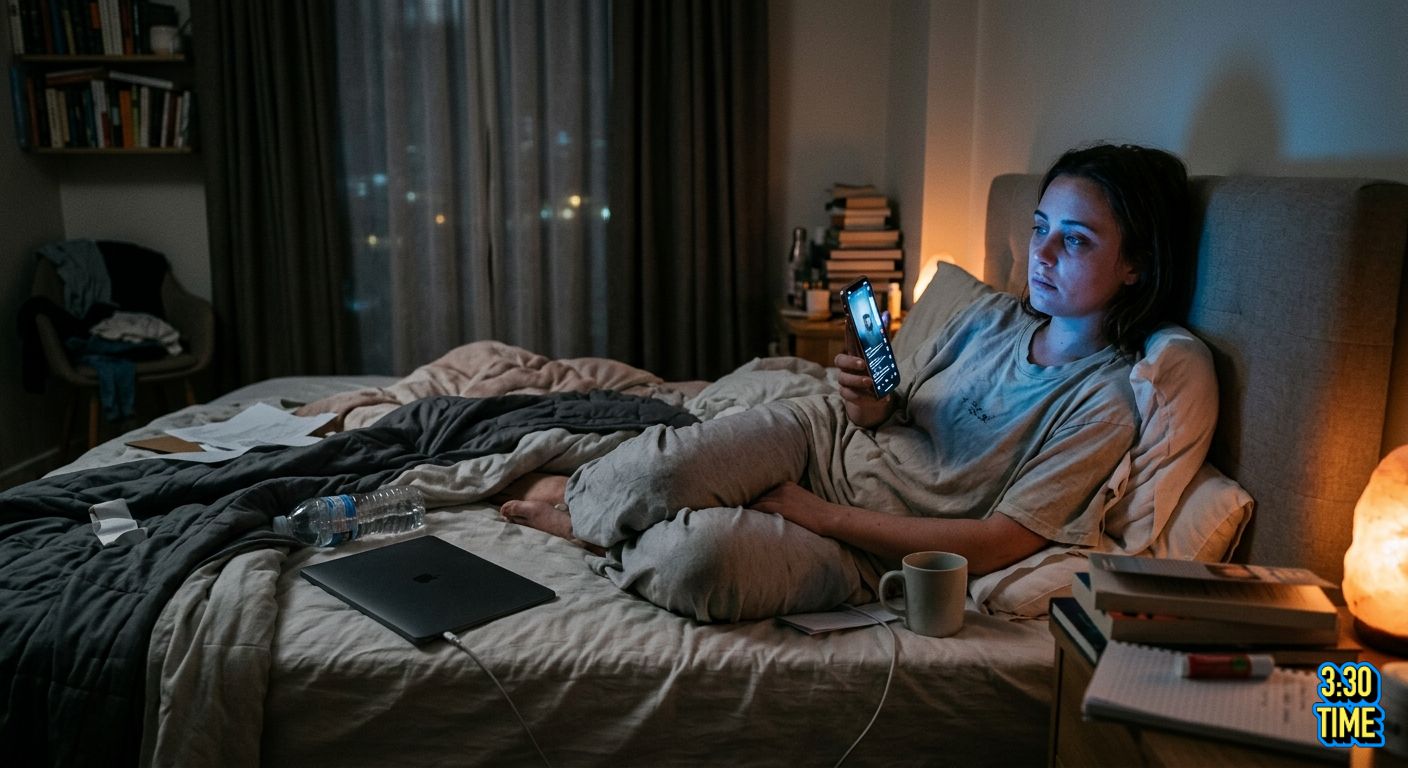
What Is Revenge Bedtime Procrastination and Why Is Everyone Talking About It?
If you have ever looked at the clock, realized it is far past midnight, and wondered why you are still awake despite feeling exhausted, you are not alone. Revenge Bedtime Procrastination has become one of the most discussed sleep behaviors of the digital age because it describes a frustrating experience millions of people recognize immediately. For many people, the pattern is surprisingly familiar.
The day ends, bedtime arrives, exhaustion is obvious, yet sleep somehow keeps getting postponed. Minutes become hours, and what was supposed to be a quick delay quietly becomes another late night.
What makes this habit so fascinating is that it is not caused by insomnia or an inability to sleep. Instead, it is a conscious decision to stay awake longer despite knowing the consequences.
What Exactly Is Revenge Bedtime Procrastination?
The term Revenge Bedtime Procrastination refers to delaying sleep in order to reclaim personal time that feels unavailable during the day. Researchers and sleep experts describe it as a form of bedtime procrastination where individuals choose leisure activities over sleep because they feel their daytime hours are controlled by obligations rather than personal choice.
The word “revenge” reflects an attempt to take back time, while “bedtime procrastination” describes postponing sleep without an external reason.
In simple terms, it describes the act of delaying sleep despite having no external reason to remain awake.
Why Is Revenge Bedtime Procrastination Becoming More Common?
Modern lifestyles have created the perfect conditions for this behavior to spread. Remote work, constant connectivity, social media platforms, streaming services, and increasing daily demands have blurred the boundary between work time and personal time. As a result, many individuals reach the end of the day feeling that they have completed tasks for everyone except themselves.
Sleep experts have observed that bedtime procrastination behaviour became significantly more noticeable during periods of increased stress and digital consumption, making the phenomenon increasingly relevant in discussions about modern well-being.
How Common Is This Problem Today?
What may feel like a personal struggle is actually a widespread behavioral pattern. Research and consumer surveys suggest that bedtime procrastination affects a substantial portion of adults, with one large survey finding that 96% of respondents admitted experiencing behaviors associated with revenge bedtime procrastination and losing an average of nearly two hours of sleep each time it occurred.
Other sleep research has estimated that bedtime procrastination behaviors impact a significant percentage of the population, demonstrating that this is far more than an occasional bad habit. It has become a recurring lifestyle pattern for many people.
Why Do People Stay Awake Even When They Are Tired?
At first glance, the behavior appears irrational. Human beings naturally seek rest when they are exhausted, yet revenge bedtime procrastination seems to reverse that instinct.
The reason this contradiction attracts so much attention is that it challenges one of the most basic assumptions about human behavior. If people naturally seek rest when tired, why would so many voluntarily delay it? Answering that question requires looking beyond sleep itself and into the psychological forces that influence everyday decisions.
3 Hidden Psychological Reasons Behind Revenge Bedtime Procrastination
By now, it is easy to see that Revenge Bedtime Procrastination is not simply a sleep habit. If it were only about tiredness, people would go to bed the moment exhaustion appeared. Instead, many people remain awake while repeatedly telling themselves, “just a few more minutes.” This reveals something important. The real battle is often not between sleep and wakefulness. It is between personal needs and daily pressures.
Understanding the psychology behind this behaviour helps explain why intelligent, responsible, and hardworking people often struggle with it despite fully understanding the importance of sleep.
1. Why Does Your Brain Crave Freedom Late at Night?
One of the strongest psychological explanations involves a need for autonomy. Human beings naturally want to feel that they have control over at least part of their day. When schedules become dominated by work deadlines, family responsibilities, commuting, studying, or caregiving, personal freedom can begin to feel limited.
Psychologists refer to this as autonomy deprivation. Late at night, when obligations finally disappear, the brain sees an opportunity to reclaim ownership of time. Watching videos, scrolling social media, reading articles, or simply staying awake can feel less like entertainment and more like a quiet act of personal freedom.
Interestingly, this idea is not entirely new. The ancient Indian concept of Ashrama Dharma divided life into balanced periods of work, learning, family responsibilities, reflection, and inner development. Similarly, texts such as the Bhagavad Gita repeatedly emphasize moderation rather than constant activity, advising individuals to maintain balance in work, rest, and daily living.
Modern psychology uses different terminology, but it often reaches a similar conclusion: when people feel that every hour of their day belongs to obligations, the mind naturally begins searching for ways to reclaim a sense of personal autonomy.
2. How Does Lack of Control During the Day Affect Sleep Decisions?
Research consistently shows that people who experience lower control over their daily schedules are more likely to delay bedtime. This happens because the brain often seeks balance. When individuals spend most of the day responding to demands from others, they may unconsciously reserve the night as the only period that truly belongs to them.
The result is a psychological trade-off. Sleep begins to compete with personal time rather than physical exhaustion. In many cases, people are not rejecting sleep itself. They are protecting the limited hours in which they feel free to make their own choices.
3. Why Does Mental Exhaustion Lead to Poor Nighttime Decisions?
Another major factor is decision fatigue. Throughout the day, the brain continuously makes choices, solves problems, manages emotions, and processes information. By night time, self-control resources become weaker.
This makes short-term rewards feel far more attractive than long-term benefits. A person may fully understand that sleeping now would improve tomorrow’s energy, focus, and mood. However, an exhausted brain naturally gravitates toward immediate comfort and pleasure.
Psychologists describe this as emotional compensation, where individuals seek small moments of enjoyment to offset the mental demands of the day. Unfortunately, those moments often arrive at the exact time when the body needs rest the most.
How Are Stress and Burnout Connected to This Behaviour?
While Revenge Bedtime Procrastination is not always caused by burnout, chronic stress can amplify it significantly. When people spend their days feeling overwhelmed, pressured, or emotionally drained, nighttime may become the only opportunity to mentally disconnect.
Instead of viewing sleep as recovery, they begin viewing wakefulness as relief. This shift is subtle but powerful because it transforms bedtime from something desirable into something that feels like the end of personal freedom. Over time, the cycle becomes increasingly difficult to break.
Why Does Understanding the Psychology Matter?
Many people blame themselves for lacking discipline when they repeatedly stay awake too late. The psychology tells a different story. In many cases, the behavior is not rooted in laziness or poor time management. It is often the result of unmet psychological needs, reduced autonomy, emotional exhaustion, and accumulated decision fatigue.
Recognising these deeper drivers is important because lasting change rarely begins by forcing earlier bedtimes. It begins by understanding what the mind is trying to recover through those extra hours of wakefulness.
3 Ways Revenge Bedtime Procrastination Is Secretly Affecting Your Life
At first, staying awake for an extra hour may seem harmless. It can even feel rewarding because those late-night moments often provide a sense of relaxation after a demanding day. The challenge is that Revenge Bedtime Procrastination does not take its toll all at once. The effects accumulate quietly.
What begins as a small delay in bedtime can gradually influence attention, performance, emotional resilience, and long-term well-being in ways that many people fail to connect back to their nightly habits.
1. What Happens to Your Brain When Sleep Becomes Optional?
The human brain treats sleep as a biological necessity rather than a luxury. During sleep, the brain processes information, strengthens memory, regulates emotions, and clears metabolic waste that accumulates throughout the day. When bedtime is repeatedly delayed, these recovery processes become compressed.
Research has shown that even modest sleep restriction can impair attention, reaction time, decision-making, and memory formation. This is one reason people often report feeling mentally scattered, forgetful, or less focused after several nights of insufficient sleep. The brain may continue functioning, but it is no longer operating at its full capacity.
The effects can be far greater than most people realise. Research comparing sleep deprivation with alcohol impairment found that after remaining awake for 17 to 19 hours, cognitive performance can become equivalent to having a blood alcohol concentration of 0.05%, while reaction speeds on some tasks were up to 50% slower. The finding highlights an important reality of sleep deprivation: the brain often loses efficiency long before people consciously recognize that anything is wrong.
2. How Does Sleep Loss Affect Productivity and Emotional Stability?
Many people turn to late-night scrolling, streaming, or entertainment as a way to relax, yet the next day often carries an invisible cost. Sleep deprivation increases emotional reactivity while reducing the brain’s ability to regulate stress effectively. As a result, minor frustrations can feel larger, patience becomes shorter, and motivation often declines.
Studies have consistently linked inadequate sleep with lower workplace performance, reduced concentration, increased errors, and greater feelings of emotional exhaustion. Ironically, the personal time gained at night can sometimes create a more difficult and stressful day tomorrow.
3. What Are the Long-Term Risks of Repeated Sleep Sacrifice?
When Revenge Bedtime Procrastination becomes a recurring lifestyle pattern rather than an occasional habit, the consequences can extend beyond daily tiredness. Long-term sleep deprivation has been associated with elevated risks of cardiovascular disease, weakened immune function, metabolic disturbances, and persistent mental health challenges.
The impact on immunity is particularly striking. Large epidemiological studies have found that adults regularly sleeping fewer than six hours per night were three to four times more likely to develop viral infections after exposure compared with individuals who maintained healthier sleep habits. Researchers have also observed measurable reductions in immune-cell activity after periods of sleep loss, highlighting how quickly the body’s defenses can be affected
Another overlooked effect is digital eye strain. Many individuals spend these extra nighttime hours looking at phones, tablets, or laptops, exposing themselves to prolonged screen use at a time when the body should be preparing for rest. This is one reason some people incorporate tools such as the relaxing Eye Massager into their evening routine, not as a solution to bedtime procrastination itself, but as a way to reduce eye fatigue and encourage a more restful transition away from screens before sleep.
Why Do These Effects Often Go Unnoticed?
One reason the habit becomes difficult to recognize is that the consequences rarely appear immediately. Missing a single hour of sleep may not feel significant. Missing that same hour several nights a week for months is a different story.
Because the decline happens gradually, many people adapt to lower energy, reduced focus, and increased fatigue without realizing how much of their potential performance is being lost. By the time the effects become obvious, the habit often feels deeply ingrained.
The Hidden Cost of Borrowing Time From Tomorrow
Revenge Bedtime Procrastination creates the illusion of gaining extra hours today while quietly borrowing resources from tomorrow. The trade-off is rarely visible in the moment, which is why the habit can persist for so long. Understanding these hidden costs is important because lasting change becomes far easier when people recognize that the issue is not simply going to bed later. It is the cumulative impact that repeated sleep sacrifice has on the brain, body, and quality of daily life.
4 Step-by-Step Solutions to Stop Revenge Bedtime Procrastination
If Revenge Bedtime Procrastination is driven by a desire to reclaim personal time, then overcoming it is not about forcing yourself into bed earlier. Most people have already tried that approach and discovered it rarely lasts. Sustainable change happens when the need that fuels the behaviour is addressed directly.
The goal is not to eliminate personal time. The goal is to stop borrowing it from sleep. Research consistently shows that lasting habit change is more successful when environments and routines are redesigned rather than relying solely on willpower.
Step 1: How Can You Create Personal Time Before Night Arrives?
One of the most effective ways to reduce bedtime procrastination is to stop treating leisure as something that only exists after the entire day is finished. Even small periods of intentional personal time during the afternoon or evening can reduce the psychological urge to reclaim hours late at night.
Researchers studying self-determination and autonomy have repeatedly found that people who feel greater control over their daily schedules report healthier behavioral patterns and lower levels of procrastination.
Whether it is reading, walking, journaling, exercising, or pursuing a hobby, scheduling personal time earlier in the day often removes the feeling that bedtime is stealing the only enjoyable hours available.
Step 2: What Should Replace Endless Nighttime Scrolling?
Many people assume they need more entertainment before bed when what they actually need is lower stimulation. The challenge is that social media platforms and short-form content are designed to continuously capture attention, making it difficult for the brain to recognize stopping points.
A more effective alternative is intentional relaxation. Some people switch to reading, others practice light stretching on a yoga mat, while others choose calming offline activities that provide enjoyment without encouraging another hour of screen exposure.
For readers who genuinely enjoy nighttime reading, devices such as a Kindle can be particularly helpful because they provide a focused reading experience without the endless notifications, social feeds, and attention-grabbing algorithms that often keep people awake far longer than intended.
Research published in the journal Computers in Human Behavior has shown that social media platforms are associated with stronger habitual engagement patterns than many traditional leisure activities because they provide unpredictable rewards that encourage continued use. Activities with clearer beginning and ending points often make it easier for people to disengage when it is time to sleep.
Step 3: How Do You Build a Night Shutdown Ritual That Actually Works?
Research on sleep habits consistently shows that predictable pre-sleep routines help strengthen the brain’s association between certain behaviors and bedtime. A shutdown ritual does not need to be complicated. It simply needs to be consistent. Dimming lights, reducing screen exposure, preparing for the next day, and creating a fixed wind-down sequence can signal that the day is coming to an end.
This is where tools such as a sunrise alarm clock or a wake-up light can be helpful because they support a more regular sleep-wake rhythm rather than relying entirely on motivation. Studies have shown that consistent sleep schedules are associated with better sleep quality and improved daytime functioning, even when total sleep duration remains similar.
Step 4: How Can You Make Sleep Easier Than Staying Awake?
Many habits persist because the unwanted option is more convenient than the desired one. If the phone remains within reach, notifications continue arriving, and entertainment is available instantly, staying awake becomes the path of least resistance. Behavioral scientists often refer to this as environment design. The solution is to make healthy choices easier.
Charging devices away from the bed, setting automatic app limits, reducing nighttime notifications, and creating a sleep-friendly bedroom all reduce friction around going to sleep. Research from behavior-change studies consistently demonstrates that people are more likely to maintain habits when the environment supports the desired action rather than working against it.
In a study published in the European Journal of Social Psychology, researchers found that habit formation took an average of 66 days, highlighting why environmental consistency often produces better long-term results than relying on willpower alone.
Why Do Small Changes Often Work Better Than Big Ones?
One reason people struggle to break Revenge Bedtime Procrastination is that they attempt dramatic overnight transformations. However, habit research suggests that small, repeatable changes are far more likely to become permanent. A bedtime moved earlier by fifteen minutes, a consistent evening routine, or a single screen-free activity may appear insignificant, yet these small adjustments often create lasting improvements because they are easier to sustain. The objective is progress rather than perfection. .
Conclusion
Perhaps the biggest lesson behind Revenge Bedtime Procrastination is that most people are not fighting sleep. They are fighting a lack of balance. The desire to stay awake late at night is often a signal that personal time, rest, and enjoyment have been pushed aside during the day. Yet reclaiming those moments by sacrificing sleep usually creates an even greater deficit tomorrow.
Real freedom is not found in borrowing hours from the night. It is found in building a daily life where personal time and healthy rest can exist together. When that balance returns, bedtime stops feeling like something you are losing and starts feeling like the recovery your mind and body have been waiting for.