Will AI Replace Humans?
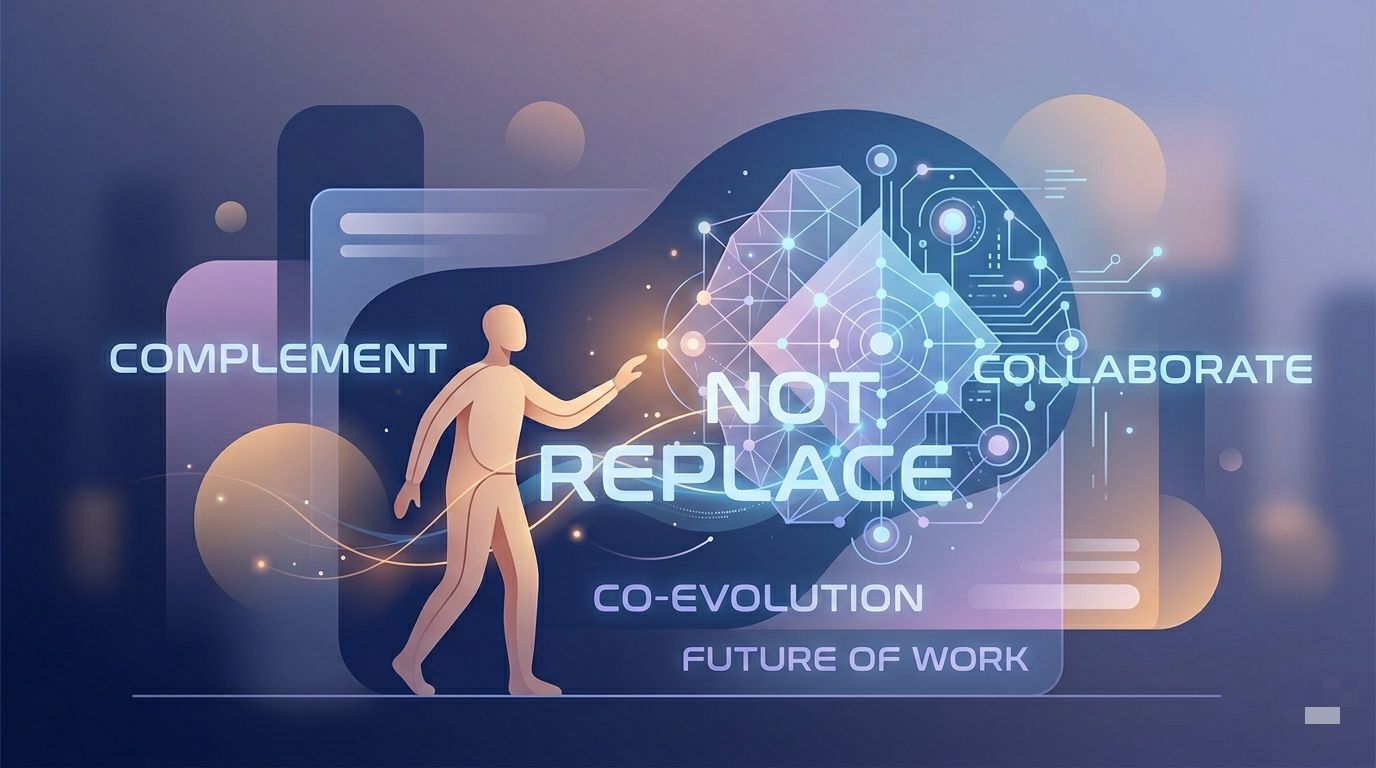
Artificial intelligence is expected to change how humans work rather than completely replace human beings.
Most experts view AI as a technology that automates specific tasks, accelerates decision-making, and reshapes job roles instead of eliminating the need for uniquely human abilities such as judgment, creativity, ethical reasoning, adaptability, and emotional understanding.
The real challenge is not whether humans will become obsolete, but how quickly people can adapt to changing skill demands.
The fear surrounding AI is partly driven by how the human brain responds to uncertainty.
When people encounter rapid change without clear predictions about the future, the brain’s threat-detection systems become more active. This can increase anxiety, heighten attention toward negative information, and create a stronger focus on worst-case scenarios.
Because work is closely connected to identity, financial security, and social belonging, uncertainty about technology often feels personal rather than purely technological.
Global workforce research consistently shows that automation creates both disruption and opportunity.
Large-scale employer surveys indicate that while some tasks and roles will decline, demand for human-centered capabilities such as analytical thinking, resilience, leadership, communication, and creative problem-solving is expected to increase alongside technological adoption.
This suggests that future relevance will depend less on competing with AI and more on learning how to work effectively with it.
For most people, the question is not whether AI will replace humans entirely.
The more practical question is:
“Which human strengths become more valuable as technology becomes more capable?”
Understanding that distinction helps shift the conversation away from fear and toward preparation.
The future of work is likely to reward people who combine technical adaptability with distinctly human qualities that machines still struggle to replicate.
5 Real Reasons So Many People Feel Scared About AI
1. Job Security No Longer Feels Stable
One of the biggest reasons people feel scared about AI is because long term career stability no longer feels guaranteed.
A few years ago learning one valuable skill often felt enough to build a stable future. Today entire industries are changing within short periods of time. Writing design customer support editing research and even coding workflows are already being reshaped by AI tools.
That shift is creating a new psychological pressure.
People are no longer asking: “How do I grow my career?”
They are asking: “How do I avoid becoming replaceable?”
And that emotional difference matters.
According to workplace researchers at Pew Research Center many employees now believe artificial intelligence will significantly affect the type of work available during the next decade even among professions once considered highly secure.
2. People Feel Pressured to Learn Constantly Just to Stay Relevant
Another major reason AI anxiety is growing is because many people feel trapped inside endless self improvement pressure.
Every week there is a new tool. A new platform. A new productivity system. A new trend people are told they must learn quickly before falling behind.
This creates silent exhaustion.
Instead of growth feeling exciting it starts feeling survival based.
Many people are now spending more time trying to stay professionally relevant than actually feeling confident in what they already know.
And over time this pressure slowly affects mental clarity.
The brain struggles to feel calm when it constantly believes it is running out of time.
3. Why Does AI Make People Feel So Anxious
AI fear is also growing because modern digital culture continuously amplifies uncertainty.
Social media feeds are filled with headlines predicting job loss automation disruption and the future of human replacement. Online conversations increasingly reward urgency fear and extreme predictions because emotionally charged content spreads faster across platforms.
Over time this creates nervous system fatigue.
People stop experiencing AI as a useful technology discussion and start experiencing it emotionally as a permanent threat surrounding their future.
Researchers from Harvard Medical School have discussed how prolonged uncertainty can increase stress responses because the human brain naturally searches for stability during periods of rapid change and unpredictability.
4. Will AI Make Humans Feel Useless? Why More People Are Starting to Feel Replaceable
One of the deepest fears surrounding artificial intelligence is not simply losing work.
It is losing the feeling of being needed.
As AI tools become faster at writing editing designing analyzing and automating tasks many people are starting to quietly question what still makes them valuable in comparison.
This emotional shift is becoming more visible across creative industries especially among younger professionals who already feel pressure to constantly prove productivity online.
A growing number of workers now feel trapped inside comparison culture where speed visibility and output are rewarded more than depth originality or human understanding.
That pressure slowly changes how people see themselves.
Instead of asking:
“What meaningful work do I want to create?”
Many people now ask:
“How do I stay competitive against systems becoming faster every month?”
And over time that mindset can reduce confidence even among highly capable individuals.
Researchers from the American Psychological Association have repeatedly discussed how constant comparison and performance pressure can negatively affect self worth especially in highly digital environments where validation becomes tied to productivity.
But this fear also reveals something important.
The more digital communication becomes automated the more people start valuing clarity emotional understanding and communication that feels genuinely human instead of mechanically optimized.
People may consume automated content quickly.
They still remember what feels real.
5. Why Nobody Clearly Knows What the Future of Work Will Look Like
Another major reason AI anxiety continues growing is because the future itself feels increasingly difficult to predict.
Students entering universities are unsure which careers will remain stable after graduation. Freelancers are watching industries evolve faster than pricing models can adapt. Employees are questioning whether the experience they spent years building will still hold the same value ten years from now.
That uncertainty affects people psychologically because the human brain naturally searches for direction during periods of change.
When clear direction disappears fear usually increases.
This is one reason conversations around artificial intelligence now feel emotionally heavier than earlier technology shifts.
People are not only trying to understand AI.
They are trying to understand where they still fit inside a rapidly changing world.
According to reports discussed by the World Economic Forum many industries are expected to experience major transformation during the next decade as automation artificial intelligence and digital systems continue reshaping workplace expectations globally.
And this is exactly where a different question slowly begins emerging.
Not only:
“Will AI replace humans?”
But also:
“What qualities will still matter most in a world becoming increasingly automated?”
That question is becoming far more important than most people realize.
What Will Still Matter in a World Where AI Keeps Growing
After reading so much about automation job disruption and artificial intelligence many people quietly begin asking a deeper question.
If machines continue becoming smarter faster and more efficient then what will still make human beings valuable in the future?
That question matters because fear usually becomes strongest when people stop recognizing their own importance inside changing systems.
Can AI Replace Human Creativity Completely
Artificial intelligence can already generate images videos writing music and design concepts within seconds. But creativity has never been only about producing content quickly.
Human creativity is also shaped by memory emotion struggle lived experience observation relationships intuition and meaning.
That difference still matters deeply.
AI can imitate patterns extremely well. Human beings still create emotional perspective from life itself.
This is one reason audiences often continue connecting more strongly with communication that feels emotionally aware, personal and genuinely human instead of perfectly optimized.
The more automated online spaces become the more people quietly start searching for voices that feel real trustworthy and emotionally grounded.
Why Do People Still Trust Humans More Than Machines
Technology can improve speed. Trust still develops through human understanding.
People may use AI for information convenience and productivity yet emotional decisions are still heavily influenced by connection empathy communication and psychological safety.
Researchers studying consumer behavior and digital trust have repeatedly found that people continue valuing authenticity emotional relatability and human credibility especially during uncertain periods.
This explains why many creators educators coaches leaders therapists and communicators still build loyal audiences even while automation continues growing rapidly.
People rarely remember only information. They remember how someone made them feel while communicating it.
What Skills Will Still Matter in the AI Era
One of the biggest misunderstandings surrounding artificial intelligence is the belief that technical efficiency alone will define future success.
In reality many experts now believe human-centered qualities may become even more important as automation increases.
And this shift is already changing the way many people think about long term career growth and personal relevance in the AI era.
Instead of only asking which industries will survive people are increasingly starting to ask a different question.
17 Human Skills AI Still Cannot Replace Completely
Some abilities still continue shaping trust leadership creativity emotional connection and meaningful communication in ways automation still struggles to fully replicate.
And as artificial intelligence keeps evolving many people are beginning to realize that long term relevance may depend not only on technical efficiency but also on qualities that feel deeply human underneath it.
At this point the real understanding does not come from predicting every change but from learning how to stay steady within it.
Because awareness alone is not the destination.
What matters next is how this awareness can actually be translated into daily choices .that reduce confusion and rebuild clarity in a practical way.
And that is where the focus slowly shifts from understanding the fear to learning how to respond to it in real life.
How to Reduce AI Anxiety and Stay Mentally Stable in a Rapidly Changing Digital World
There comes a point in this entire AI conversation where information alone is no longer enough. People already know that AI is growing fast. What they struggle with is not understanding the change but staying mentally steady inside it.
And this is where the focus quietly shifts from fear to practical grounding.
Why AI Anxiety Feels So Real in Daily Life. AI anxiety is not only created by technology itself. It is created by how continuously the mind is exposed to uncertainty without pause.
People are learning new tools while simultaneously consuming constant updates about job changes automation trends and future predictions.
This combination slowly creates mental overload. And when the mind is overloaded it starts interpreting even normal growth as pressure instead of opportunity.
That is why the solution cannot be only informational. It has to be behavioural and emotional at the same time.
3 Practical Ways to Reduce AI Overwhelm Without Losing Productivity
1. Create a Controlled Learning Boundary Instead of Constant Learning Pressure
One of the biggest silent stress patterns today is endless skill consumption.
Instead of learning everything at once the mind performs better when learning becomes structured and limited.
A simple shift is to choose one skill focus and stay with it long enough for clarity to form instead of constantly switching directions.
This reduces internal comparison pressure and builds stability over time.
2. Rebuild Focus Through Physical and Visual Boundaries in Daily Life
Modern work environments blur the line between rest and productivity.
One simple way to reduce cognitive fatigue is to support the mind with physical boundaries that signal when it is time to focus and when it is time to rest.
And in daily life this shift is often supported through a few simple external habits and tools that help reduce mental overload during long screen based work routines.
• People who spend long hours working with screens often find it helpful to create small environmental supports that reduce visual fatigue and improve focus. Simple adjustments such as optimizing screen settings, reducing glare, and using eyewear designed for prolonged digital use can make extended learning sessions feel more sustainable.
• Many professionals also benefit from maintaining a structured idea-capture system that turns scattered thoughts into organized action steps. Whether through a digital note workspace, guided reflection prompts, or a simple daily review practice, externalizing information helps reduce mental clutter and improves decision clarity during periods of rapid change.
3. Replace Reactive Thinking With Intentional Reflection
Most AI anxiety does not come from lack of information. It comes from consuming too much information without processing it.
A small but powerful shift is to pause and reflect before reacting to every new trend or update. This creates a mental gap between stimulus and response where clarity can naturally return. Over time this reduces emotional overwhelm and improves decision stability.
A Simple Shift That Changes Everything
The goal is not to remove AI from life.
The goal is to stop letting constant information define emotional stability.
When structure replaces randomness the mind becomes less reactive and more grounded.
And in that state even fast technological change feels more manageable.
Conclusion :- A Subtle Direction You Should Not Ignore
At some point solutions alone are not enough.
Because people eventually start realising that tools can support them but cannot fully define their direction.
This is where deeper understanding of human capability becomes important again especially the kind of abilities that remain stable even when technology keeps evolving.
And that naturally leads toward a more important question many people are now beginning to ask quietly in their minds.
What skills actually stay relevant when everything else is changing so fast.
Because in a world where tools are becoming accessible to everyone the real difference is no longer who learns faster but who learns what actually remains valuable long term.